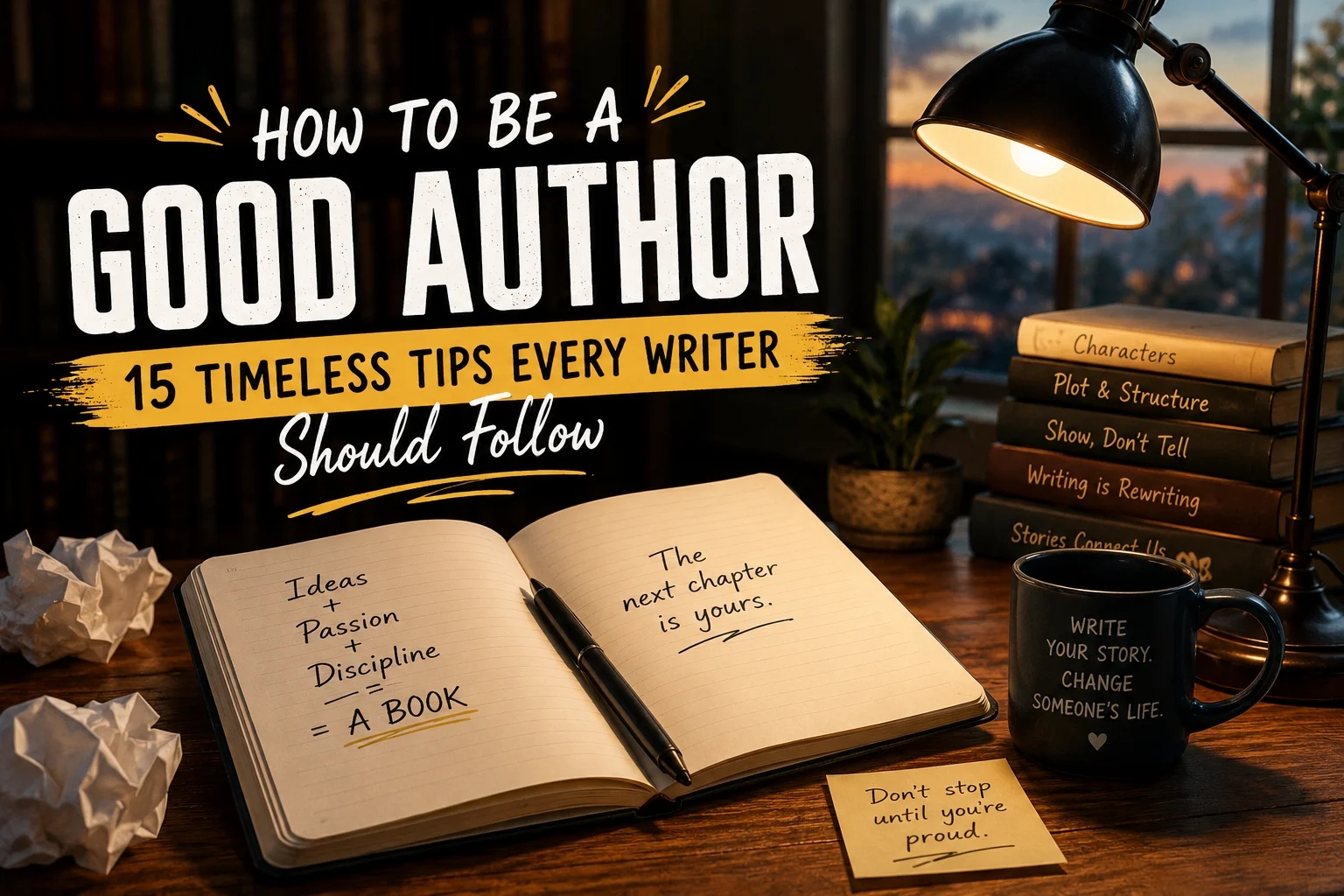
How to Be a Good Author: 15 Timeless Tips Every Writer Should Follow
Want to Write a Book? Read This First
Published July 1, 2026
15 Essential Tips to Become a Better Author
Writing a book is easy compared to finishing one. Publishing is difficult, but becoming an author readers genuinely trust and remember is an entirely different journey.
Every successful author started exactly where you are now—with a blank page, countless doubts, and an idea they believed deserved to exist. The difference wasn't talent alone. It was consistency, curiosity, and the willingness to improve with every chapter.
Whether you're writing your first novel or your tenth, these practical tips will help you grow as an author.
1. Write Consistently, Not Occasionally
Writing inspiration comes and goes, but discipline builds books.
Instead of waiting for the "perfect mood," create a routine. Even writing 300–500 words a day can become a complete novel within months.
Progress beats perfection.
2. Read More Than You Write
Great writers are lifelong readers.
Explore different genres, writing styles, cultures, and authors. Reading teaches pacing, dialogue, world-building, emotional depth, and storytelling techniques that no writing guide can fully explain.
Read both books you love and books you don't. You'll learn from both.
3. Finish What You Start
Many authors begin exciting stories.
Few actually finish them.
A completed imperfect manuscript is infinitely more valuable than ten unfinished masterpieces. Editing can improve a finished draft—but nothing can improve a blank page.
4. Accept That Your First Draft Won't Be Perfect
The first draft exists for one reason:
To get the story out of your head.
Don't waste time rewriting every paragraph while drafting. Keep moving forward. Revision is where books truly become great.
5. Know Your Characters
Readers don't remember plots as much as they remember people.
Give your characters:
Clear goals
Real flaws
Unique personalities
Personal fears
Meaningful growth
Perfect characters feel fake.
Human characters feel unforgettable.
6. Show, Don't Always Tell
Instead of writing:
"She was nervous."
Write something readers can experience:
"Her fingers trembled as she reached for the door handle."
Good writing lets readers feel emotions instead of simply reading about them.
7. Listen to Feedback Without Losing Your Voice
Criticism isn't an attack.
It's an opportunity.
Some feedback will improve your story.
Some won't fit your vision.
Learn to recognize the difference.
Never change your story simply to please everyone—because pleasing everyone is impossible.
8. Edit Ruthlessly
First drafts are written.
Books are rewritten.
During editing:
Remove unnecessary scenes.
Tighten dialogue.
Eliminate repetitive words.
Improve pacing.
Correct grammar and spelling.
Every revision makes your story stronger.
9. Study Storytelling
Writing is both art and craft.
Learn about:
Story structure
Character arcs
Conflict
Pacing
Dialogue
Point of view
World-building
Suspense
Emotional payoff
The more you understand storytelling, the more naturally your writing flows.
10. Don't Compare Your Beginning to Someone Else's Success
Every bestselling author once had zero readers.
Every award-winning novelist once wrote terrible first drafts.
Comparison creates discouragement.
Improvement creates confidence.
Focus on becoming a better writer than you were yesterday.
11. Build a Relationship With Readers
Readers aren't just customers.
They're the reason stories continue to live long after publication.
Respond to comments.
Thank your supporters.
Share your writing journey honestly.
A loyal community often becomes an author's greatest strength.
12. Write What Excites You
Trends change.
Passion lasts.
Readers can tell when an author genuinely loves the story they're telling.
Don't chase what's popular.
Create something meaningful to you.
13. Keep Learning
The best authors never stop improving.
Attend workshops.
Read articles.
Study interviews with successful writers.
Experiment with different genres and techniques.
Every new lesson becomes another tool in your creative toolbox.
14. Be Patient With Your Journey
Success rarely happens overnight.
Some books take years to write.
Some authors publish multiple novels before finding their audience.
Every page you write improves your skills.
Trust the process.
15. Remember Why You Started
Before reviews.
Before sales.
Before rankings.
There was simply a story you wanted to tell.
Hold onto that reason.
It's what will keep you writing through difficult chapters—both on the page and in life.
Final Thoughts
Being a good author isn't about having perfect grammar or the most complicated vocabulary.
It's about telling stories that make readers laugh, cry, think, hope, or see the world differently.
Write with honesty.
Revise with patience.
Learn with humility.
And most importantly—never stop creating.
The next story that changes someone's life might be the one you're writing today.
Share this article
Share this article with readers who'll want to read it.
You may also like

How Long Should a Book Be? Word Count by Genre (2027)
November 16, 2026

I Love to Write Day: The Story Behind November 15
November 15, 2026

75% of Celebrity Memoirs Aren't Written by the Celebrity
August 4, 2026

The Fortress Chronicles: The Fortress Opens — A Thought-Provoking Beginning
September 2, 2026