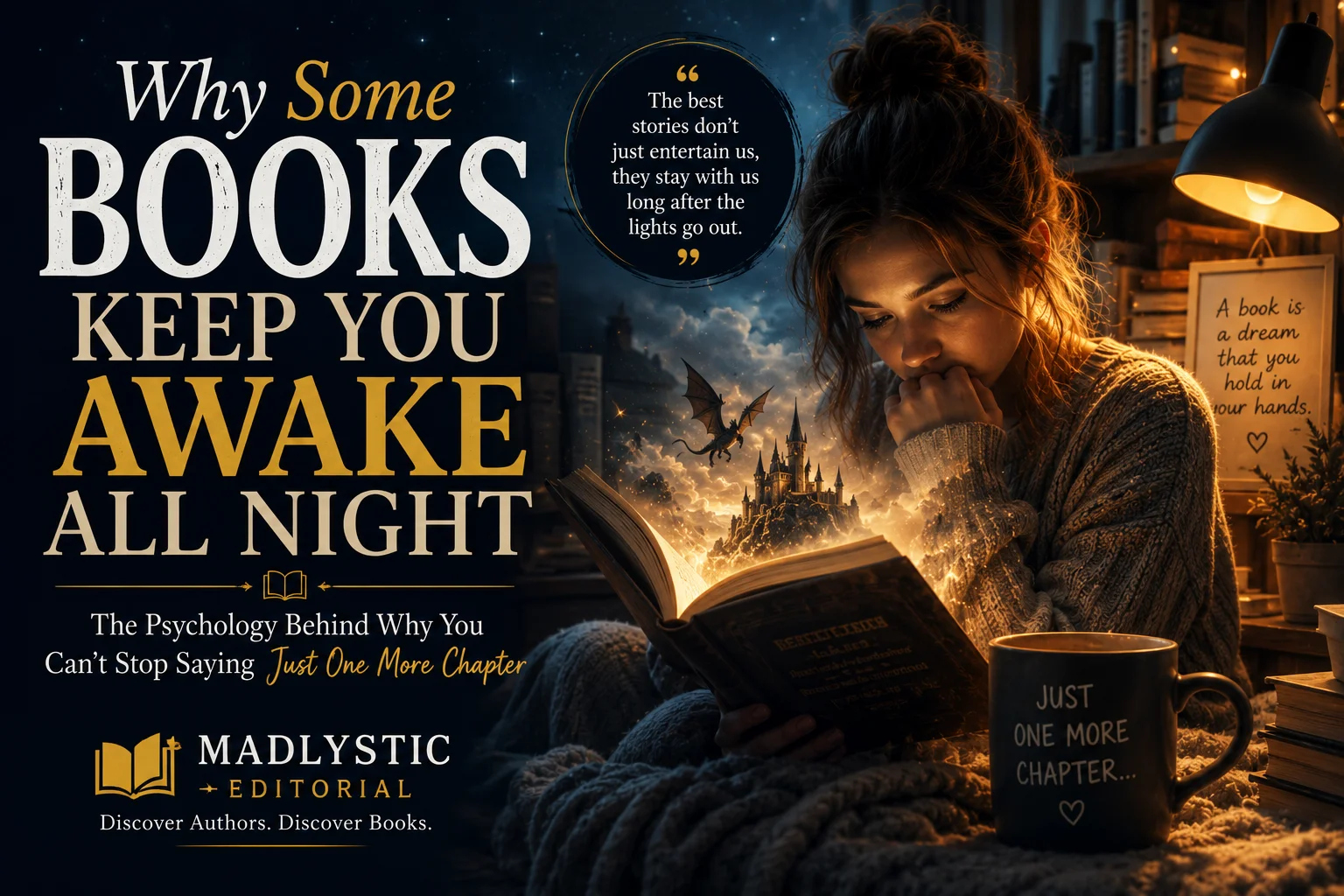
Why Some Books Keep You Awake All Night
Why Some Books Keep You Awake All Night | The Psychology of Page-Turners | Madlystic Discover why some books are impossible to put down. Explore the psychology of page-turners, curiosity, emotional investment, cliffhangers, and the storytelling techniques tha
Published July 17, 2026
Perfect. Let's make today's article the first under the new Madlystic Editorial Standard—more narrative, more authoritative, and more memorable.
Why Some Books Keep You Awake All Night
The Psychology Behind Why You Can't Stop Saying "Just One More Chapter"
Published by Madlystic Editorial Team | July 17, 2026
Estimated Reading Time: 16–20 Minutes
Introduction
It's nearly midnight.
You promised yourself you'd read just one chapter before bed.
That chapter ends with an unexpected revelation, so you decide to read one more. Then another. Before you know it, it's 2:17 a.m., your bedside lamp is still glowing, and tomorrow's alarm suddenly feels far too close.
If you've ever experienced this, you're far from alone.
Most avid readers have sacrificed sleep for a story at least once. Whether it's a gripping mystery, an epic fantasy, or a heartfelt romance, certain books seem almost impossible to put down. They don't just entertain us—they take control of our attention.
But why does this happen?
What separates a novel that keeps us awake all night from one that's quietly returned to the bookshelf after a few chapters?
The answer isn't simply "good writing." It lies in a fascinating combination of psychology, storytelling, curiosity, and emotion.
Let's explore why some books make us forget the clock entirely.
The Brain Hates Unfinished Stories
Have you ever found yourself thinking about a book while cooking dinner, commuting to work, or trying to fall asleep?
Psychologists have long observed that people tend to remember unfinished tasks better than completed ones, a phenomenon commonly known as the Zeigarnik Effect. While this effect doesn't explain every page-turner, it helps illustrate why unresolved situations can linger in our minds.
Authors take advantage of this naturally.
A mystery isn't solved.
A conversation is interrupted.
A character opens a mysterious letter.
A phone rings just before an important confession.
Suddenly, your brain wants closure.
Closing the book doesn't close the question.
Curiosity Is One of Humanity's Strongest Motivators
Imagine someone tells you:
"I found something incredible today..."
...and then walks away.
Your curiosity immediately activates.
Books work the same way.
Rather than giving readers every answer immediately, great stories carefully control the flow of information. Every chapter answers one question while quietly introducing another.
That balance keeps readers moving forward.
Too many unanswered questions become frustrating.
Too many answers remove the mystery.
The best novels live comfortably between those two extremes.
We Don't Just Follow Characters—We Build Relationships
Think back to the last fictional character you genuinely missed after finishing a book.
For many readers, characters become more than names on a page.
Harry Potter's courage.
Elizabeth Bennet's wit.
Sherlock Holmes' brilliant deductions.
Katniss Everdeen's resilience.
Readers spend hours—even days—with these characters. Over time, they begin to understand their fears, celebrate their victories, and worry about their future.
When something threatens a character we care about, our emotional investment makes it difficult to stop reading.
We're no longer curious only about the plot.
We're concerned about someone who feels surprisingly real.
📖 Did You Know?
Charles Dickens published many of his novels in serialized installments during the 19th century. Readers often waited weeks for the next chapter, eagerly discussing theories and cliffhangers long before television or streaming services existed.
The desire to know "what happens next" isn't new—it's been part of storytelling for centuries.
Great Pacing Doesn't Mean Constant Action
There's a common misconception that page-turners are filled with explosions, battles, or shocking twists.
In reality, many unforgettable books spend entire chapters on quiet conversations.
So why do they still keep readers hooked?
Because pacing isn't about speed.
It's about momentum.
Every scene should create the feeling that something meaningful is changing—whether it's a relationship, a mystery, or the reader's understanding of a character.
Readers don't need nonstop action.
They need a reason to turn the page.
Emotion Is Stronger Than Suspense Alone
Imagine two stories.
In one, a bridge is collapsing.
In the other, a bridge is collapsing—but someone the reader deeply cares about is trapped on it.
The event hasn't changed.
The emotion has.
Readers stay awake because they care.
Plot creates excitement.
Emotion creates commitment.
The most unforgettable books combine both.
Every Chapter Feels Like a Small Reward
Great novels understand something about motivation.
Each chapter should leave readers feeling they gained something:
A new clue.
A surprising revelation.
A deeper understanding of a character.
An unexpected emotional moment.
That small sense of progress encourages readers to continue.
The experience becomes rewarding chapter after chapter.
The Power of Cliffhangers
Not every cliffhanger involves someone hanging from a literal cliff.
Sometimes the strongest cliffhangers are surprisingly quiet.
A whispered secret.
A missing photograph.
An unexpected visitor.
A simple sentence:
"There's something I never told you..."
Readers don't continue because they were forced to.
They continue because curiosity feels stronger than self-control.
Familiar Worlds Become Comfortable Places
One reason readers love long-running series is that returning to a familiar world feels comforting.
Whether it's a magical castle, a small coastal town, or a futuristic galaxy, readers begin to treat fictional settings like places they've actually visited.
That's why leaving a beloved series often feels bittersweet.
You're not simply finishing a book.
You're saying goodbye to a world.
Why Some Books Don't Have This Effect
Not every book needs to keep readers awake all night.
Some stories are intentionally slow, reflective, or contemplative.
Literary fiction, historical novels, and character-driven dramas often invite readers to pause and think rather than race toward the ending.
A slower pace doesn't make a book less successful.
It simply creates a different reading experience.
The goal isn't speed.
The goal is engagement.
What Writers Can Learn
If you're writing your own novel, remember that readers rarely continue because of one spectacular scene.
They continue because each chapter gives them a reason to care about the next.
Ask yourself:
Does every chapter create curiosity?
Have I given readers someone worth caring about?
Does each scene change something meaningful?
Am I balancing answers with new questions?
Readers don't need constant surprises.
They need constant reasons to stay invested.
📚 A Story That Changed Reading Habits
When J.K. Rowling's Harry Potter and the Deathly Hallows was released in 2007, midnight launch events attracted millions of readers worldwide. Many bookstores stayed open overnight as fans lined up for hours to get their copies.
The excitement wasn't driven by marketing alone. It came from years of emotional investment in the story and a universal desire to discover how the journey would end.
It's a powerful reminder that the strongest page-turners don't simply create suspense—they create lasting emotional connections.
Final Thoughts
The books that keep us awake all night rarely rely on one secret ingredient.
Instead, they combine curiosity, emotional investment, memorable characters, meaningful pacing, and the promise that the next page will reveal something worth discovering.
That's why readers sometimes lose track of time while reading. The story becomes more compelling than the clock.
Years later, most of us won't remember the exact hour we finished a favorite novel.
But we'll remember the feeling of telling ourselves, one more chapter...
...and meaning it every single time.
Quote of the Article
"There is no friend as loyal as a book." — Ernest Hemingway
Key Takeaways
Curiosity encourages readers to keep turning pages.
Emotional attachment is often stronger than action alone.
Great pacing creates momentum, not just speed.
Cliffhangers work because the brain naturally seeks closure.
Memorable characters make readers emotionally invested.
Every chapter should leave readers wanting just a little more.
Continue Reading
If you enjoyed this article, you may also like:
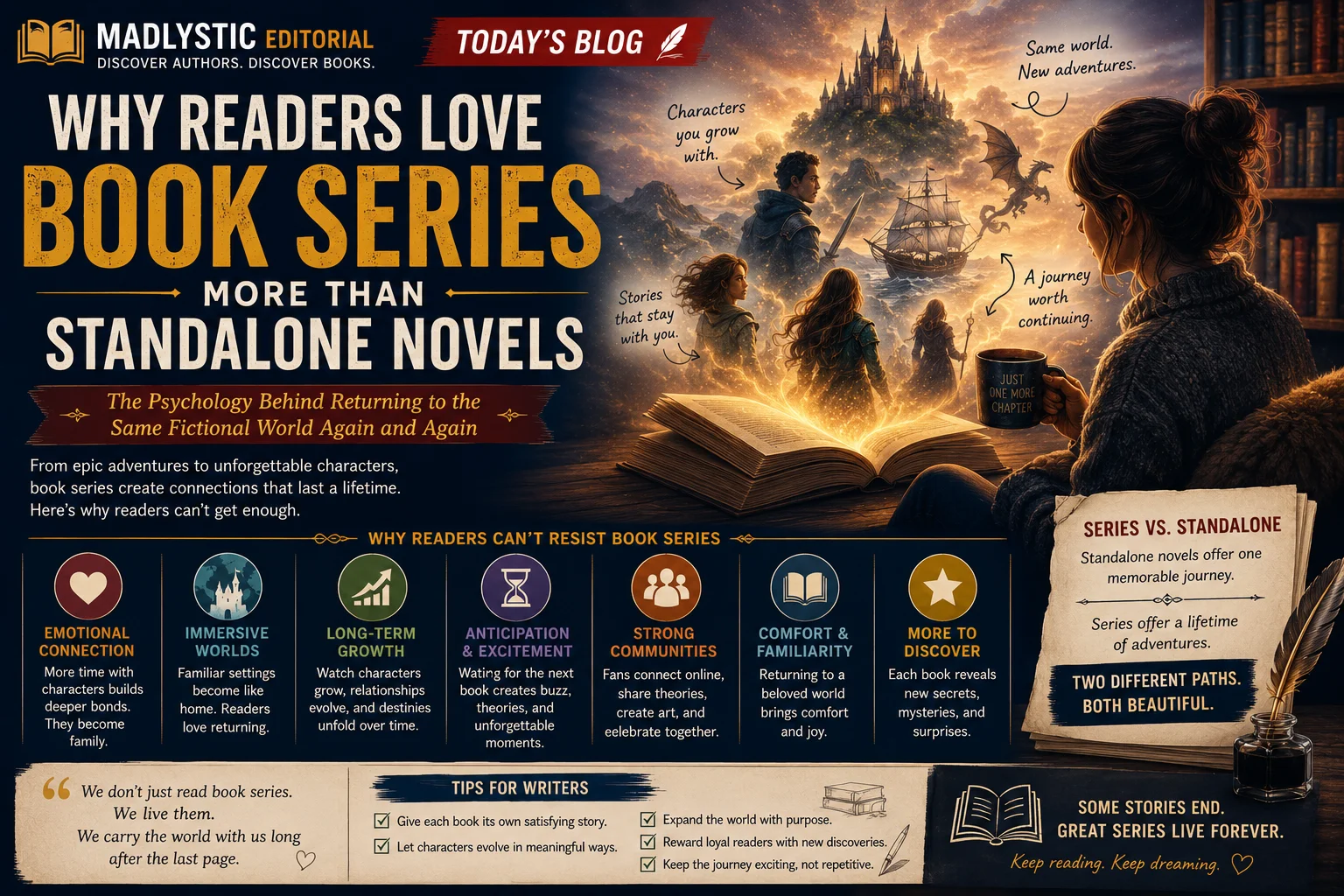
Why Readers Love Book Series More Than Standalone Novels
The Psychology Behind Why We Love Plot Twists
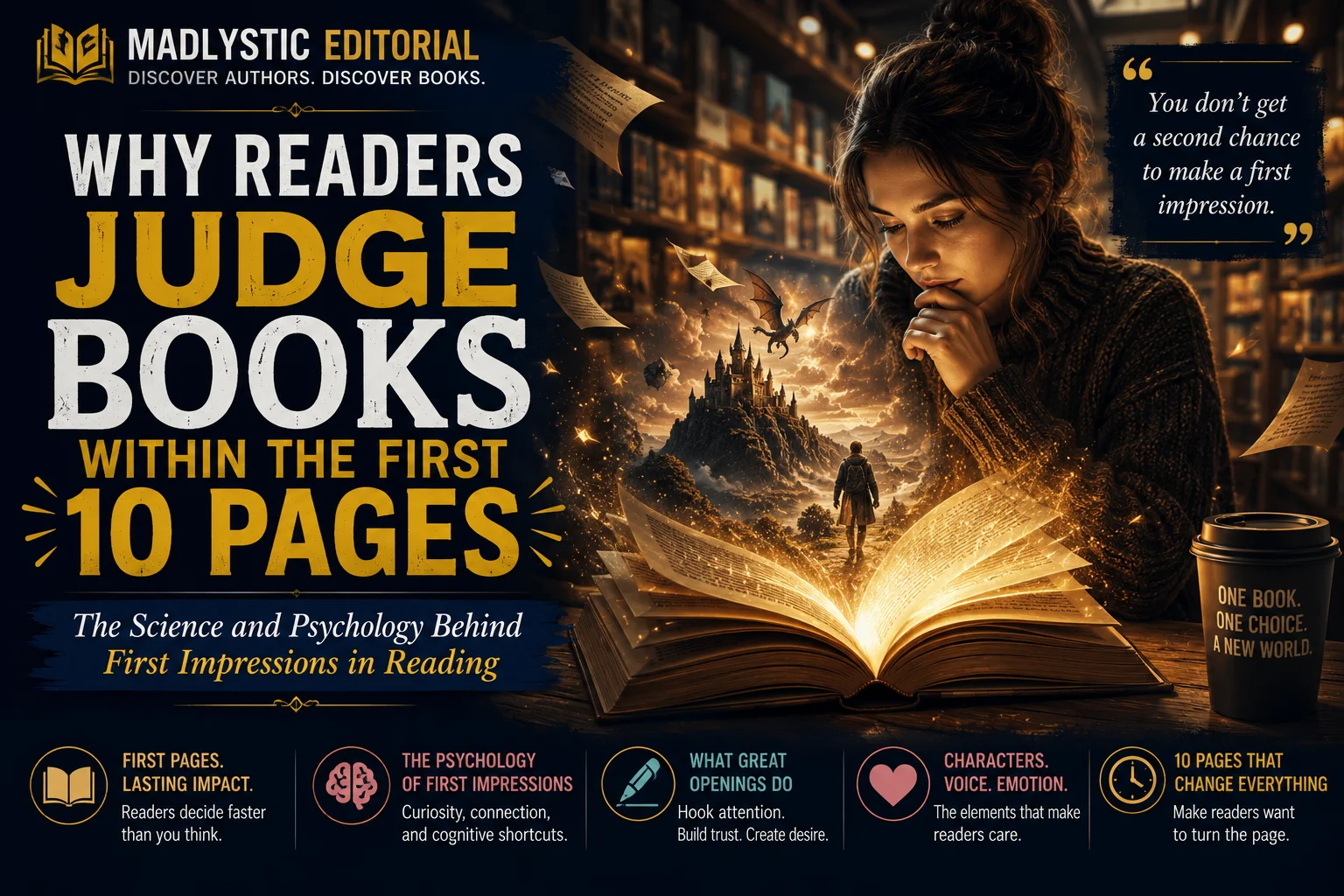
Why Readers Judge Books Within the First 10 Pages
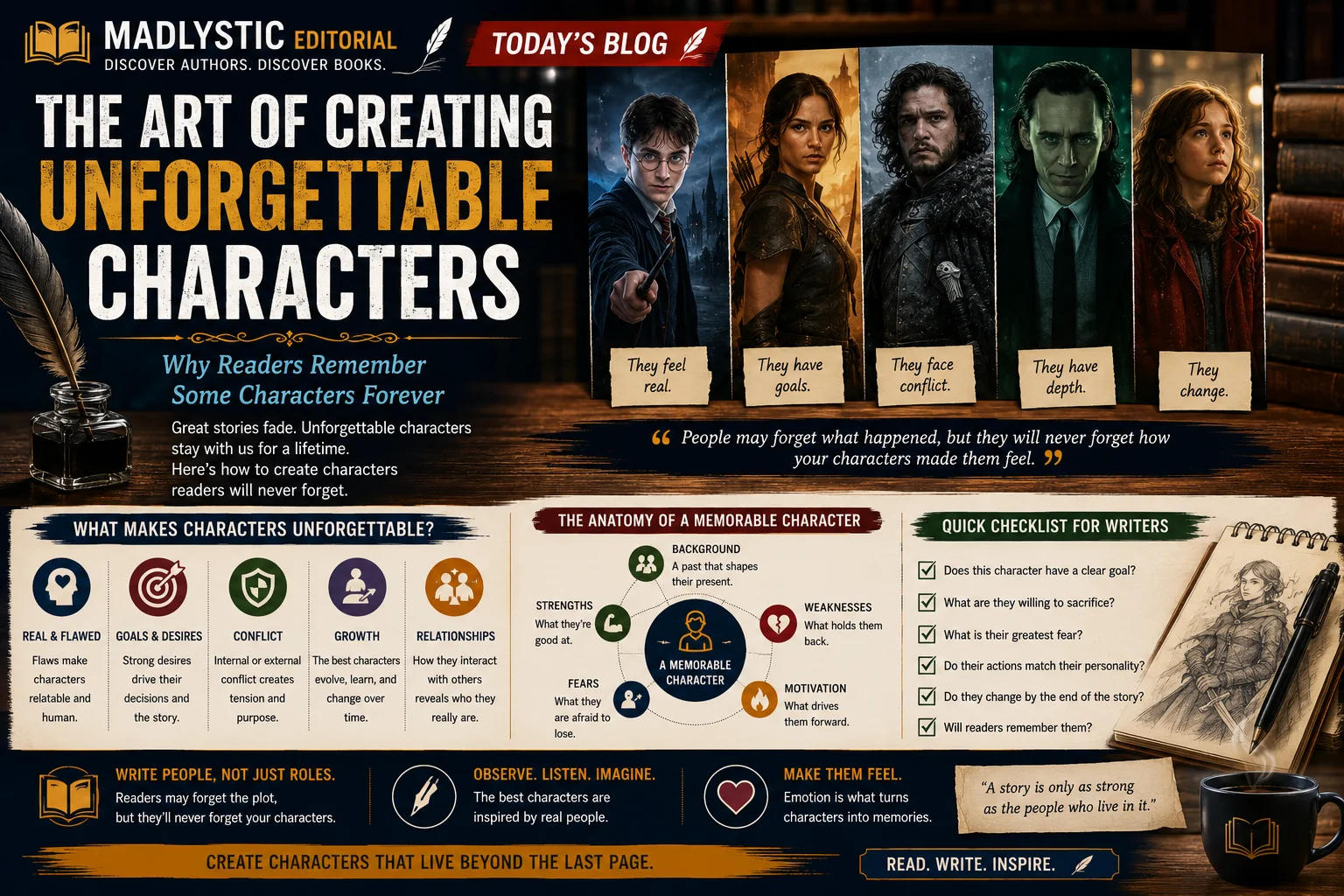
The Art of Creating Unforgettable Characters
Short Description
Why do some books keep us reading long after bedtime? Discover the psychology behind page-turners, emotional storytelling, curiosity, and the writing techniques that make readers say, "Just one more chapter."
Share this article
Share this article with readers who'll want to read it.