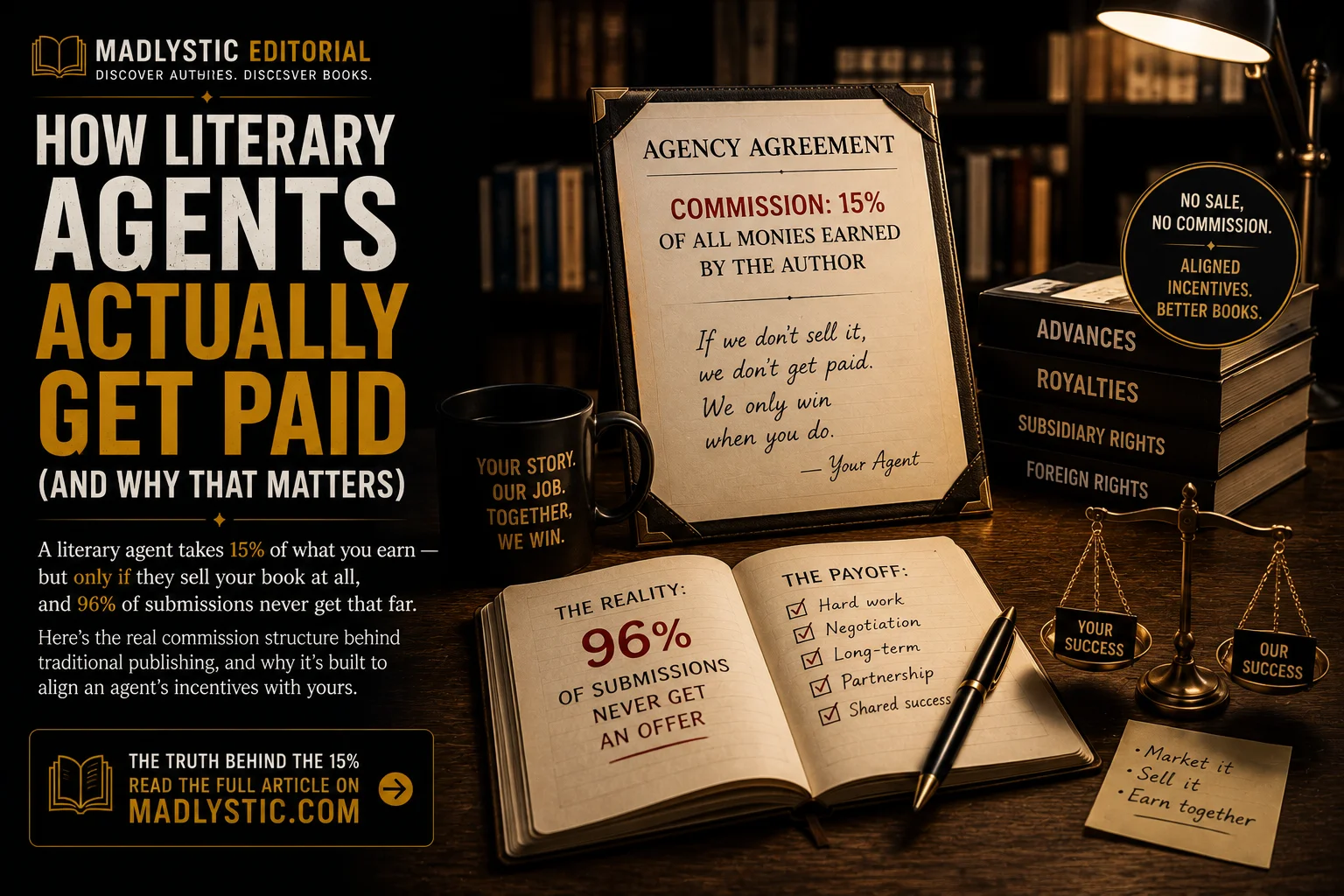
How Literary Agents Actually Get Paid (And Why That Matters)
A literary agent takes 15% of what you earn — but only if they sell your book at all, and 96% of submissions never get that far. Here's the real commission structure behind traditional publishing, and why it's built to align an agent's incentives with yours.
Published August 3, 2026
8 min read
Quote of the Day
"If an agent ever asks you to pay a fee for their services, walk away. They are not a real agent." — Nelson Literary Agency, on the single clearest red flag in the industry
Almost every aspiring author eventually wonders the same thing: what does a literary agent actually get out of this, and how much of my book's earnings do they take? The answer is more interesting than a simple percentage, because the entire structure of how agents get paid is deliberately built around a specific incentive alignment — one that explains both why good agents fight hard for their authors, and why the query process feels so brutally selective in the first place.
The standard rate, and why it's remarkably consistent industry-wide
Literary agents work almost exclusively on commission, and that commission has become genuinely standardized across the industry: 15% on domestic sales — meaning US sales for a US-based agent, UK sales for a UK-based one — and typically 20% on foreign rights, translations, or other subsidiary rights like film and television options, where the agent often has to split that commission with a co-agent who specializes in that specific market.
Here's the concrete math: if an agent negotiates a $25,000 advance for your book, they take their 15% — $3,750 — and you receive the remaining $21,250. That percentage applies to everything tied to the book going forward too: royalties, foreign sales, subsidiary rights, for as long as the book remains under contract.
The single most important thing to understand: they only get paid if you get paid
This is the detail that actually matters most, and it's worth sitting with because it explains almost everything else about how the relationship works. A legitimate literary agent earns nothing — not a consultation fee, not a reading fee, not a flat rate for their time — unless they actually sell your book to a publisher. If they never make a sale, they've worked entirely for free.
This creates a genuinely rare alignment of financial interest that doesn't exist in most other professional relationships an author might use. As one industry breakdown put it plainly, an agent's financial incentives end up almost perfectly matched to the author's own — meaning when they're negotiating your contract, chasing down a late royalty statement, or fighting for a better subsidiary rights deal, they're doing it because their own paycheck depends on the exact same outcome yours does.
Why this makes the fee-charging red flag so important
This commission-only structure is also precisely why the industry treats any agent who asks for money upfront as a serious warning sign, not just a minor inconvenience. If an agent is charging a reading fee, a submission fee, or any payment not tied to an actual, documented expense with a receipt, that's a direct violation of how the entire business model is supposed to work — and multiple literary agencies have stated it as bluntly as possible: a legitimate agent never asks you to pay them before they've sold something. The commission-only model isn't just tradition; it's the actual mechanism that filters out agents who aren't genuinely confident they can sell your specific book.
Why so few queries actually succeed
Given that an agent earns nothing without a sale, it starts to make sense why the query process is so unforgiving: a commonly cited rejection rate across agents and editors sits around 96%, meaning roughly 4% of queried manuscripts land representation at all. This isn't arbitrary gatekeeping — from a commission-only agent's perspective, taking on a manuscript they're not genuinely confident they can sell to a publisher is pure unpaid risk, with no guaranteed return on the significant time they'll spend editing, pitching, and negotiating on your behalf.
What agents actually do to earn that 15%
The commission isn't payment for simply forwarding your manuscript to publishers — agents typically provide developmental feedback before a book ever goes on submission, maintain direct relationships with specific editors at specific imprints (roughly 80% of books published by major New York houses are sold through agents, largely because publishers rely on agents as a pre-filter), negotiate contract terms most authors would have no leverage or expertise to negotiate alone, and continue managing the business relationship — chasing statements, handling subsidiary rights, resolving disputes — for as long as the book remains in print.
The one honest tradeoff worth naming
None of this means going the agented, traditionally-published route is automatically the right choice over self-publishing — it's simply a different structure with a different tradeoff. An agent takes a real, ongoing percentage of your earnings, permanently, in exchange for access to a market (major publishing houses) that's genuinely difficult to reach without one, plus real expertise most authors don't have in negotiating publishing contracts. Self-publishing keeps 100% of royalties but requires the author to either develop or pay for every one of the services an agent bundles together — editing, cover design, marketing, distribution relationships — individually and upfront, with no guarantee any of it sells either. Neither path is objectively better; they're just different bets on where the 15% actually goes.
Conclusion
Understanding exactly how a literary agent gets paid clarifies a relationship that can otherwise feel opaque and slightly mysterious from the outside. The commission-only structure isn't a minor administrative detail — it's the entire mechanism that aligns an agent's financial success with yours, explains why the query process is so selective, and gives you a clear, simple test for spotting a scam before you ever sign anything: a real agent's payday and your payday are, by design, the exact same event.
Share this article
Share this article with readers who'll want to read it.
You may also like
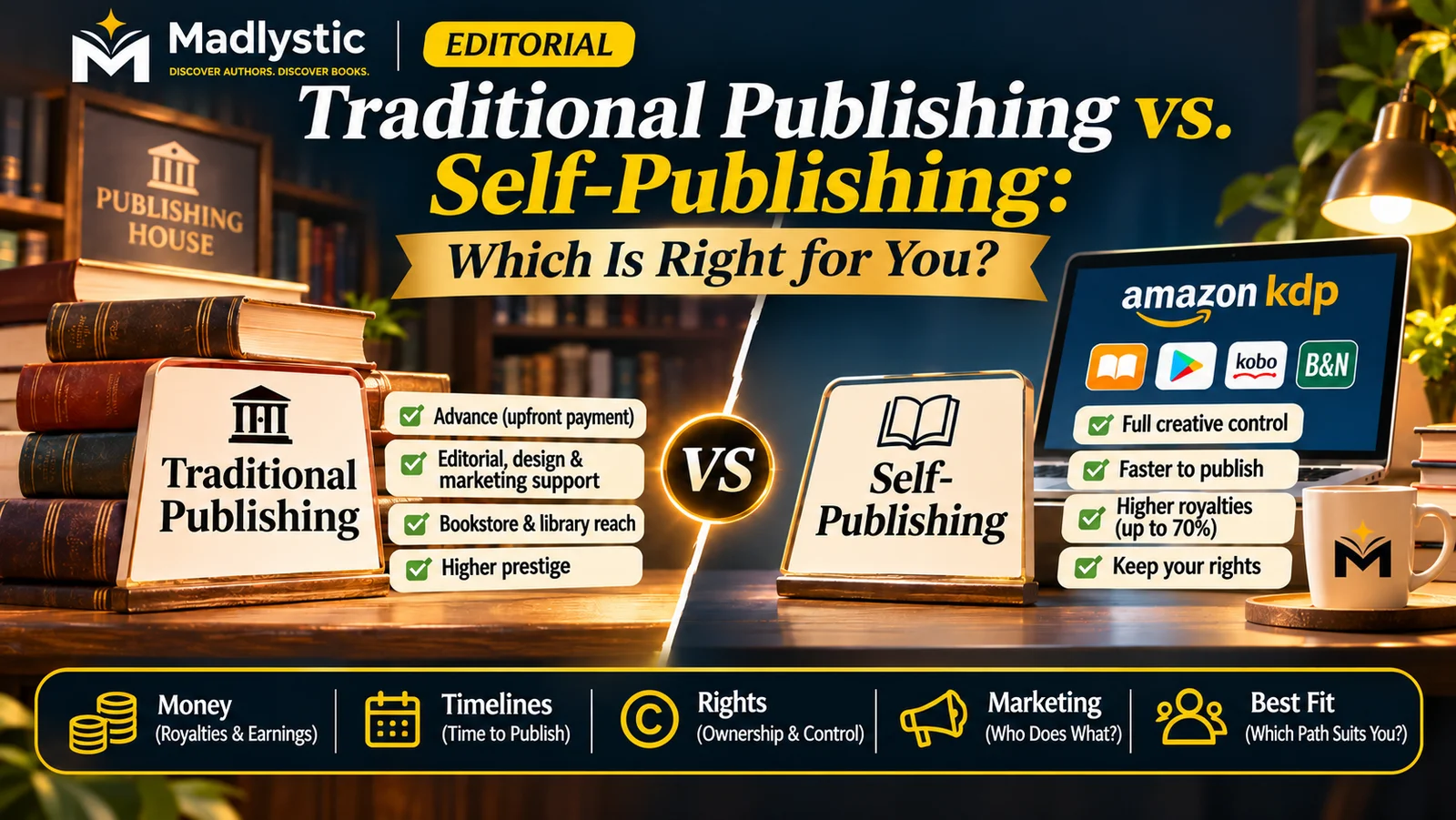
Traditional Publishing vs. Self-Publishing: Which Is Right for You?
November 24, 2026

Why Literary Agents Say They Hate Prologues (But Keep Signing Books That Have Them)
August 12, 2026
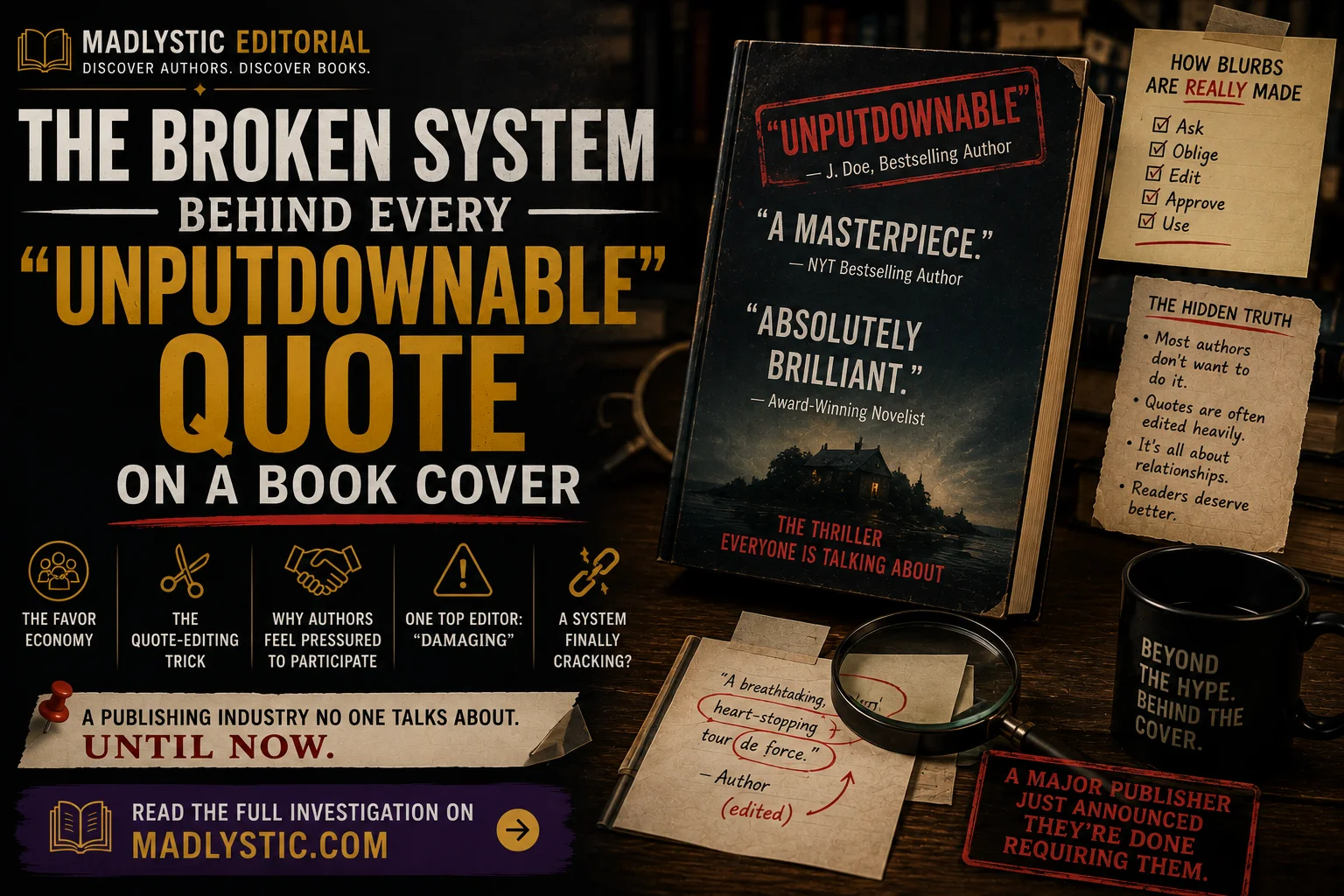
The Broken System Behind Every "Unputdownable" Quote on a Book Cover
August 3, 2026
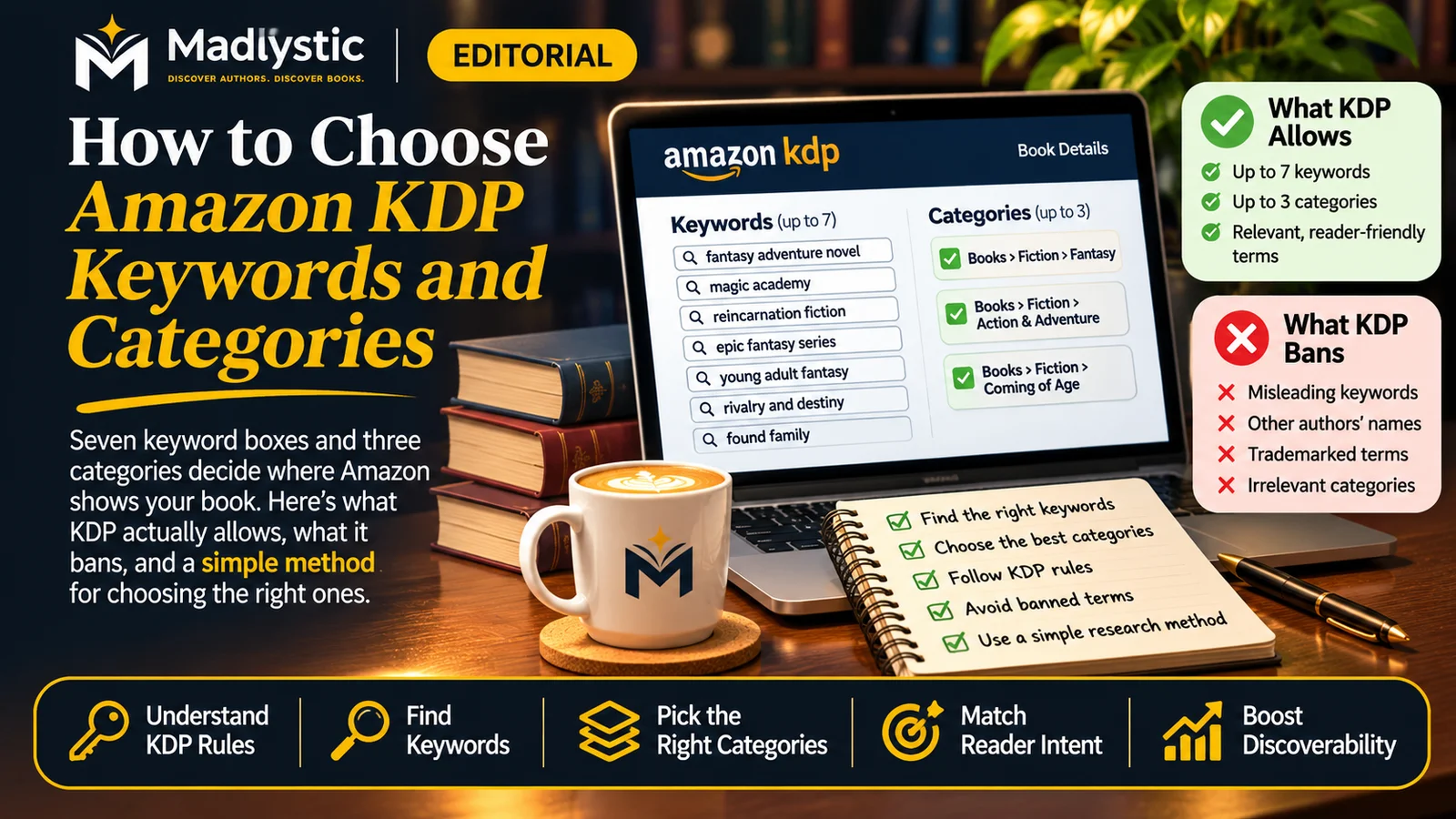
How to Choose Amazon KDP Keywords and Categories
November 20, 2026