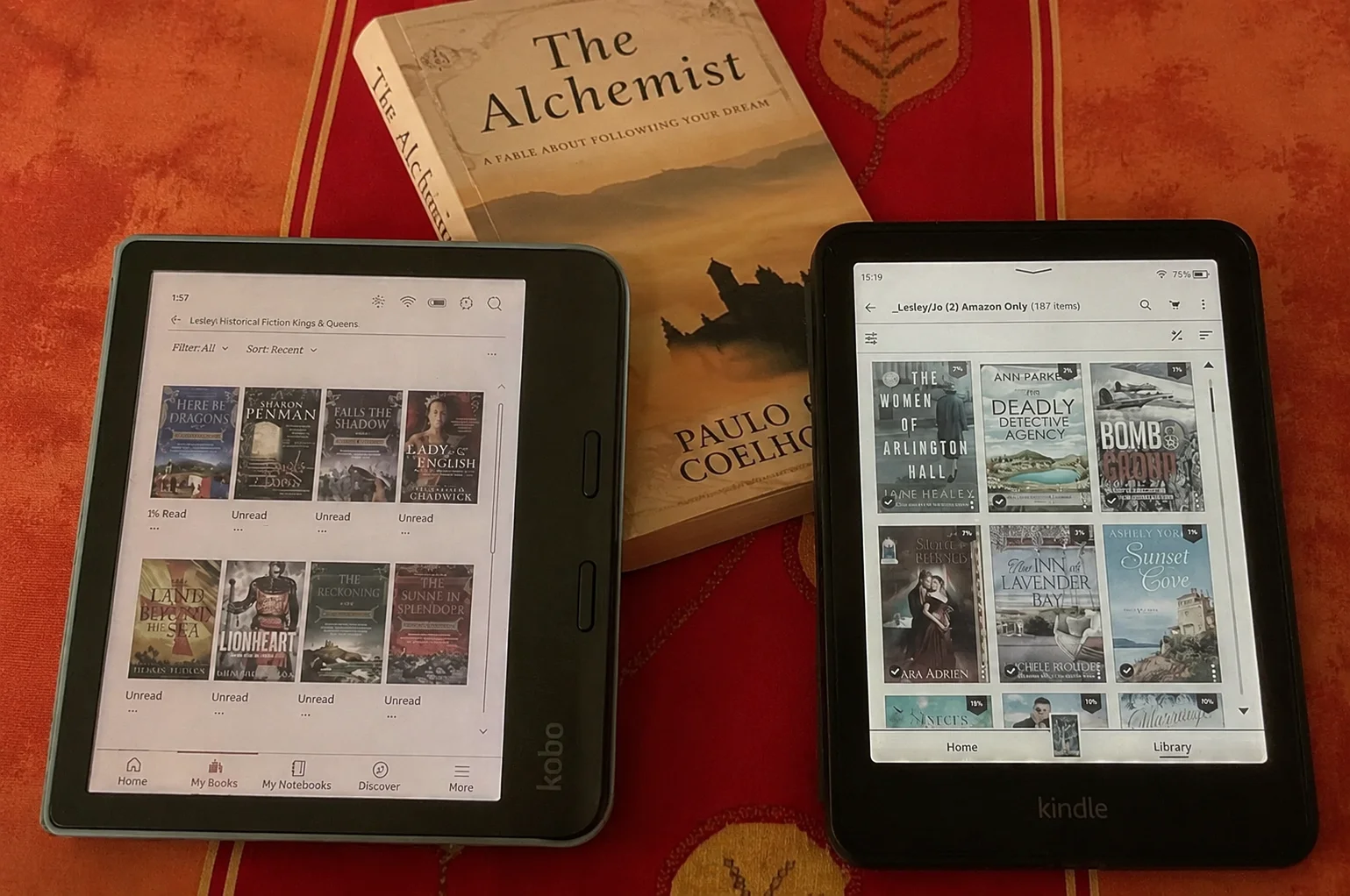
Kindle, Kobo, or Paperback? Choosing the Reading Experience That Fits You
Discover the pros and cons of Kindle, Kobo, paperbacks, and hardcover books. Compare convenience, reading comfort, cost, portability, and the timeless appeal of physical books to find the perfect reading format for your lifestyle. Kindle vs Kobo vs Paperback vs Hardcover: Which Is Better?
Published July 2, 2026
Kindle, Kobo, or Paperback? Choosing the Reading Experience That Fits You
For centuries, books have been our gateway to knowledge, imagination, and adventure. Today, readers have more choices than ever before. Should you embrace an e-reader like Kindle or Kobo, or stick with the timeless charm of paperbacks and hardcover books?
The truth is simple: there is no universally "best" format. Each offers a unique reading experience, and the ideal choice depends on your lifestyle, reading habits, and personal preferences.
Let's explore the strengths and trade-offs of each.
The Rise of Digital Reading
E-readers have transformed the way people consume books. Devices such as Amazon Kindle and Kobo allow readers to carry thousands of books in a device lighter than most novels.
Whether you're commuting, traveling, or reading before bed, digital libraries are always within reach.
Advantages of Kindle and Kobo
1. Carry an Entire Library
Instead of packing multiple books for a vacation or business trip, an e-reader stores thousands of titles in one compact device.
Perfect for:
Frequent travelers
Students
Daily commuters
Avid readers
2. Instant Access
Finished a novel at midnight?
You can purchase and begin reading your next book within seconds without leaving your home.
No waiting.
No shipping.
No bookstore visit.
3. Adjustable Reading Experience
Modern e-readers allow readers to customize nearly every aspect of reading.
You can adjust:
Font size
Font style
Line spacing
Margins
Brightness
Warm lighting
Dark Mode (on supported devices)
This makes reading significantly easier for people with visual impairments or those who simply prefer larger text.
4. Built-in Dictionary and Translation
Encounter an unfamiliar word?
Simply tap it.
Most e-readers instantly display:
Definitions
Wikipedia summaries
Translations
Character references (in many books)
This is especially valuable for students and language learners.
5. Reading Progress and Statistics
Digital platforms can show:
Reading streaks
Average reading speed
Time remaining in a chapter
Time left to finish the book
Reading goals
For many readers, these features become strong motivational tools.
6. Better for Night Reading
Many modern e-readers use front-lit E Ink displays instead of traditional LCD screens.
These displays reduce glare while providing a paper-like reading experience that remains comfortable in low-light environments.
Why Readers Still Love Paper Books
Despite rapid advances in technology, printed books continue to thrive—and for good reason.
For many people, reading is about more than consuming words.
It is an experience.
1. The Feel of Real Paper
Nothing quite replaces:
Turning physical pages
Feeling textured paper
Smelling a new book
Admiring beautifully printed covers
These sensory experiences create an emotional connection many readers treasure.
2. Better Shelf Presence
A bookshelf tells a story.
Favorite novels, signed editions, and beautifully designed hardcovers become part of your home's personality.
Many readers enjoy collecting books just as much as reading them.
3. No Batteries Required
Paper books never need:
Charging
Software updates
Wi-Fi
Internet access
You simply open the book and begin reading.
4. Easier for Deep Study
Many students and researchers find it easier to:
Highlight passages
Write notes
Flip between chapters
Compare multiple pages
Although digital annotation has improved, physical books remain the preferred choice for intensive academic reading.
5. Less Digital Distraction
Reading from a dedicated paper book creates intentional focus.
There are:
No notifications
No pop-ups
No battery anxiety
No temptation to switch apps
Many readers find this encourages deeper concentration.
Hardcover vs Paperback
Printed books also come in different formats.
Hardcover
Advantages
Extremely durable
Premium appearance
Long-lasting
Excellent for collectors
Better protection for pages
Disadvantages
More expensive
Heavier
Takes up more shelf space
Paperback
Advantages
Affordable
Lightweight
Portable
Easy to carry
Widely available
Disadvantages
Covers may bend
Pages can wear over time
Less durable than hardcover editions
Cost Comparison
Digital books are often less expensive than printed editions because they eliminate printing, storage, and shipping costs.
However, prices vary depending on the publisher, region, and promotional offers. Subscription services and library lending can also make digital reading especially economical for frequent readers.
Printed books, on the other hand, often retain resale value, can be gifted, shared, or displayed, and require no compatible device.
Which Format Is Better for Different Readers?
Reader TypeBest ChoiceFrequent TravelerKindle or KoboStudentPaperback or Kindle (with notes)CollectorHardcoverBudget ReaderKindle or KoboCasual ReaderPaperbackNight ReaderKindle or KoboGift BuyerHardcoverBook CollectorHardcoverBeach ReaderPaperback or Waterproof KoboLong VacationKindle or Kobo
The Environmental Perspective
The environmental impact of books isn't as straightforward as it may seem.
Printed books require paper, printing, and transportation, while e-readers require electronic components, batteries, and manufacturing resources.
If an e-reader replaces dozens or even hundreds of printed books over its lifetime, its overall environmental footprint can become relatively lower. On the other hand, readers who purchase only a few books each year may find that keeping a small physical library is equally reasonable.
The most sustainable choice often comes down to how long you use your books—or your device.
Can You Enjoy Both?
Absolutely.
Many passionate readers use a hybrid approach.
They read digitally while traveling, commuting, or reading at night, then purchase physical editions of the books they truly love to keep on their shelves.
This combines convenience with the lasting satisfaction of owning favorite titles in print.
Final Thoughts
Books are about stories, ideas, and imagination—not just the format they come in.
If you value portability, convenience, and instant access, an e-reader like Kindle or Kobo may become your favorite companion. If you appreciate the tactile pleasure of turning pages, displaying your collection, and immersing yourself in a traditional reading ritual, paperbacks and hardcovers continue to offer an experience that technology cannot fully replicate.
In the end, the best reading format is the one that keeps you turning pages—whether with a swipe of your finger or the rustle of paper. Every book read is a journey, and every format has the power to inspire, educate, and entertain.
Share this article
Share this article with readers who'll want to read it.