Libby Gives Readers More Control with New AI Content Filters
Libby Introduces AI Content Filters for Readers | Publishing News Libby is rolling out AI content filters, allowing readers to choose whether to see AI-generated books, audiobooks, translations, and cover art.
Published July 4, 2026
As artificial intelligence becomes increasingly common in publishing, one question has been on the minds of many readers:
How do I know if a book was created or narrated using AI?
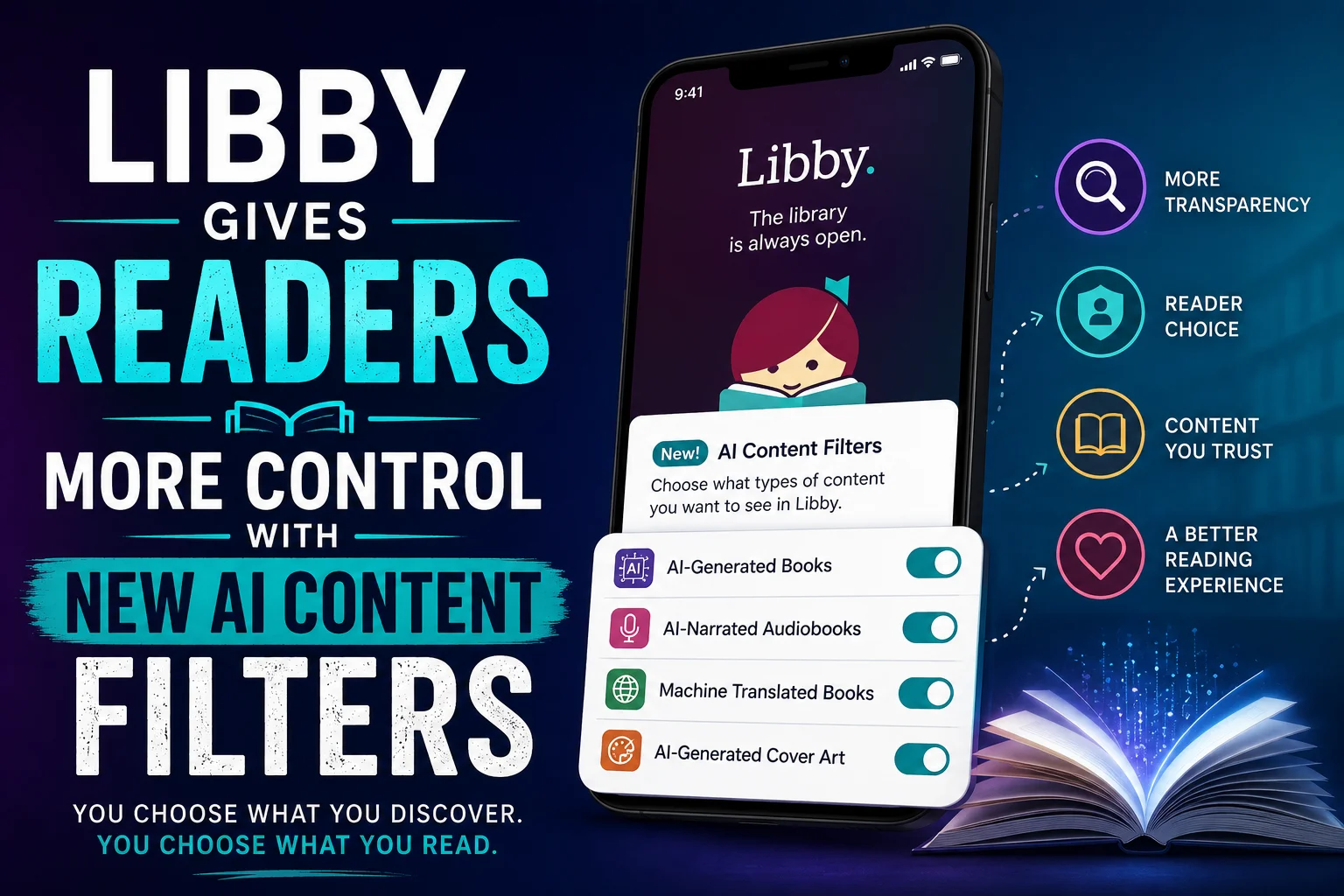
Libby, the popular digital library app developed by OverDrive, is taking a step toward answering that question. The platform is introducing new AI content filters that allow readers to choose whether they want to see books and audiobooks created with certain AI technologies.
The update isn't about banning AI-generated content—it's about giving readers more transparency and control over what appears in their library experience.
What Is Libby?
If you've never used Libby, it's one of the world's most popular library apps.
Through partnerships with more than 92,000 public libraries, schools, and universities across over 115 countries, Libby allows users to borrow ebooks and audiobooks for free using their library cards. The platform hosts millions of digital titles and has recorded over a billion digital book loans.
What's Changing?
Libby plans to introduce new settings that let users filter content based on how it was created.
Readers will be able to choose whether they want to see or hide content involving:
AI-generated books
AI-narrated audiobooks
Machine-translated books
AI-generated cover artwork
The goal is to make AI usage more transparent, allowing readers to decide which types of content they prefer.
Why Is This Important?
Artificial intelligence is rapidly becoming part of the publishing industry.
Today, AI can assist with:
Writing books
Translating novels
Narrating audiobooks
Designing book covers
Creating marketing material
While many creators use AI responsibly as a creative tool, others worry that fully AI-generated books could flood digital marketplaces with low-quality content.
Rather than taking sides, Libby is offering readers the freedom to choose what they want to discover.
Transparency Over Restriction
One notable aspect of Libby's approach is that it isn't trying to remove AI-generated works from its catalog.
Instead, the company will rely on publishers to identify AI-created content using standardized metadata. Those labels will power the new filters available to readers. Libby has chosen not to use automated AI-detection tools, which can produce inaccurate results.
Audiobooks Are More Popular Than Ever
The announcement also highlights a broader trend in digital reading.
Although audiobooks represent only a small portion of Libby's catalog, they now account for roughly half of all usage on the platform.
This growing popularity explains why AI narration has become such an important topic for both readers and publishers. Even so, OverDrive's leadership has said they still value human narrators and see them as the preferred choice for many productions.
What This Means for Authors
For authors, these changes reinforce an important idea:
Readers increasingly want to know how books are created.
Whether a book is:
Written entirely by a human
Assisted by AI tools
Narrated by a professional voice actor
Machine translated
Transparency is becoming part of the reading experience.
Authors who openly communicate their creative process may build greater trust with their audience as AI-assisted publishing continues to evolve.
What This Means for Readers
Readers now have greater control over the books they discover.
Some may prefer traditionally written novels, while others are comfortable exploring AI-assisted works or synthetic narration.
Instead of deciding for everyone, Libby is placing that choice directly in readers' hands.
It's a small feature—but one that reflects a much larger conversation about the future of publishing.
Final Thoughts
Artificial intelligence is reshaping the publishing world, but reader trust remains essential. Libby's new AI content filters represent a balanced approach: they don't prohibit AI-generated books, nor do they promote them. Instead, they emphasize transparency, giving readers the information they need to make informed choices.
As AI becomes more common across writing, translation, narration, and publishing, features like these could become standard across digital reading platforms. For authors, publishers, and readers alike, the future may not be about choosing between human creativity and AI—but about clearly understanding where each plays a role.
Share this article
Share this with readers who'll want to know.