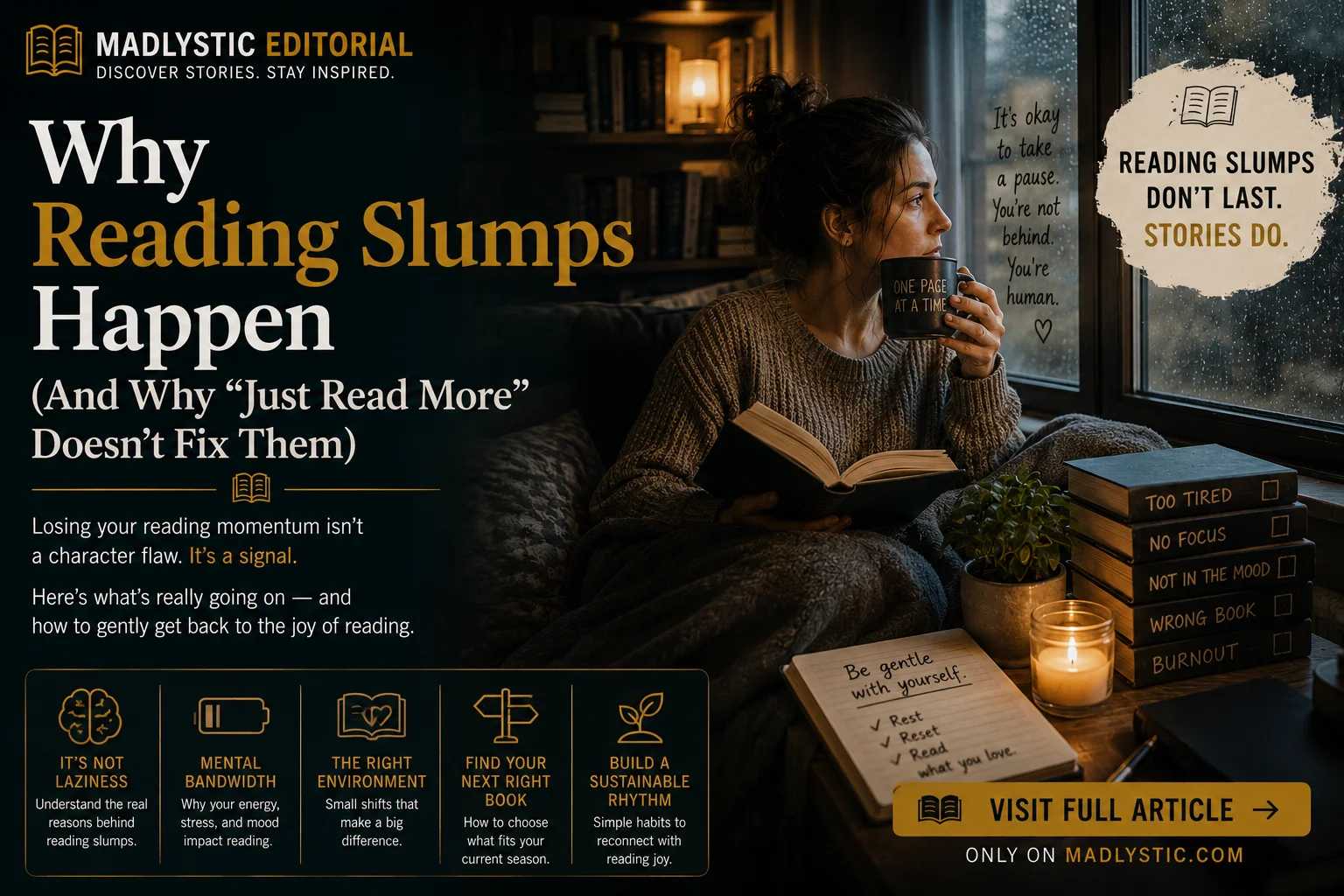
Why Reading Slumps Happen (And Why "Just Read More" Doesn't Fix Them)
A reading slump isn't laziness, and it isn't really about willpower either. Here's what's actually happening in your brain when books stop working for you — and the one overlooked reason most "get out of your slump" advice quietly fails.
Published July 23, 2026
9 min read
Quote of the Day
"Reading requires attention and mental energy. If those resources are being depleted throughout the day, it can be difficult to focus and maintain interest in reading." — Shruthi Nair, LMHC-D, LPC
There's a specific, quiet shame that comes with a reading slump that other hobbies don't seem to trigger the same way. Nobody feels guilty about not going for a run one particular week. But a stack of unread books on the nightstand, staring back at you while you scroll your phone instead, tends to feel like a personal failing — proof that you've lost something about yourself you used to have. That feeling is worth addressing directly, up front: it isn't a failing, and the actual mechanism behind a reading slump has very little to do with laziness or lost willpower.
What's actually happening isn't about motivation
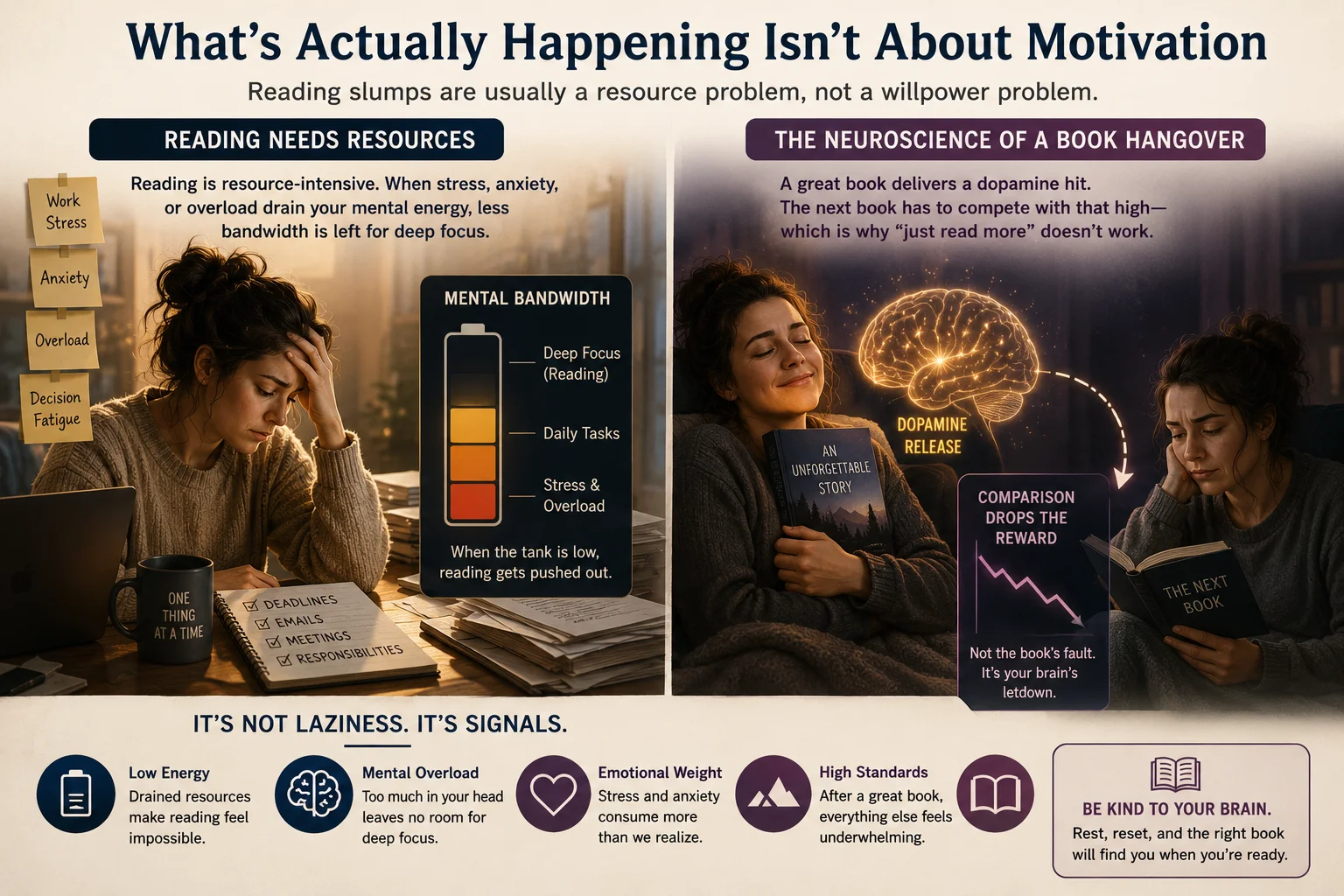
The instinct, when a slump hits, is to treat it as a discipline problem — just sit down and read, push through it, build the habit back by force. Licensed therapist Shruthi Nair pushes back on that framing directly: reading slumps have less to do with motivation and more to do with what's actually happening day to day, because reading is a genuinely resource-intensive activity, drawing on attention and mental energy that competing stressors can quietly deplete before you ever pick up a book. If those resources are already spent on work stress, anxiety, or general overload, there's simply less cognitive bandwidth left for the sustained focus reading requires — no matter how much you consciously want to read.
There's a real neurological layer underneath this too. Finishing a genuinely great book delivers a distinct dopamine hit — the brain's reward signal for a satisfying experience — and the book that follows it is, quite literally, competing against that high. This is the actual mechanism behind what readers call a "book hangover": not sentimentality, but a real neurochemical letdown where an merely-good next book can't help but feel disappointing by direct comparison, regardless of its actual quality.
The five most common triggers, and why they're all different problems
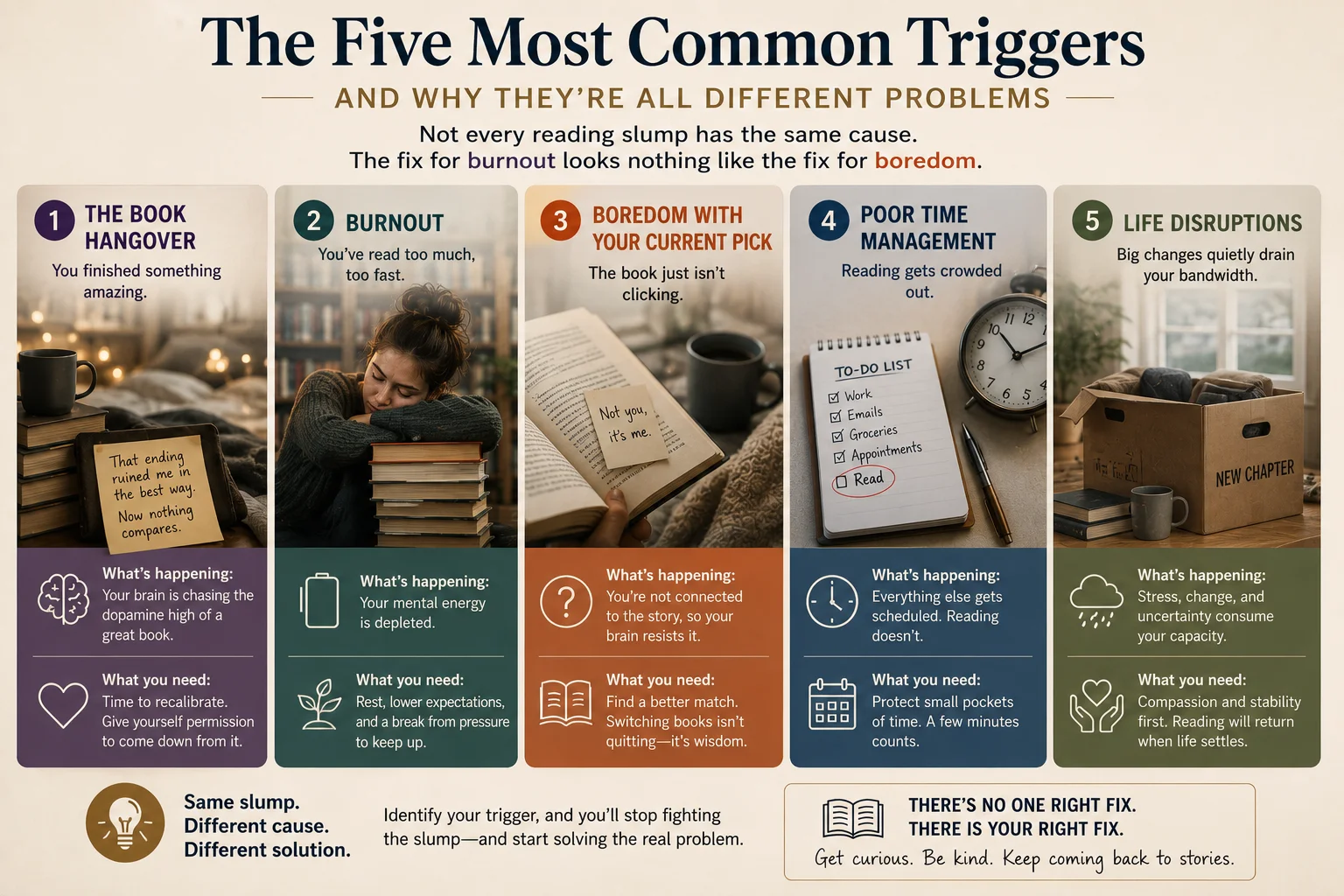
Not every slump has the same cause, which is exactly why generic advice often misses: the fix for burnout looks nothing like the fix for boredom. The most commonly cited triggers are the book hangover (finishing something so good that nothing else can follow it), general burnout from reading too much too fast, boredom with your current pick specifically, poor time management crowding reading out of the day entirely, and major life disruptions — a new job, a move, a stressful season — that quietly consume the mental bandwidth reading needs to draw from. Treating all five with the same "just push through it" advice is a large part of why that advice so often fails.
Why "just push through" backfires, specifically
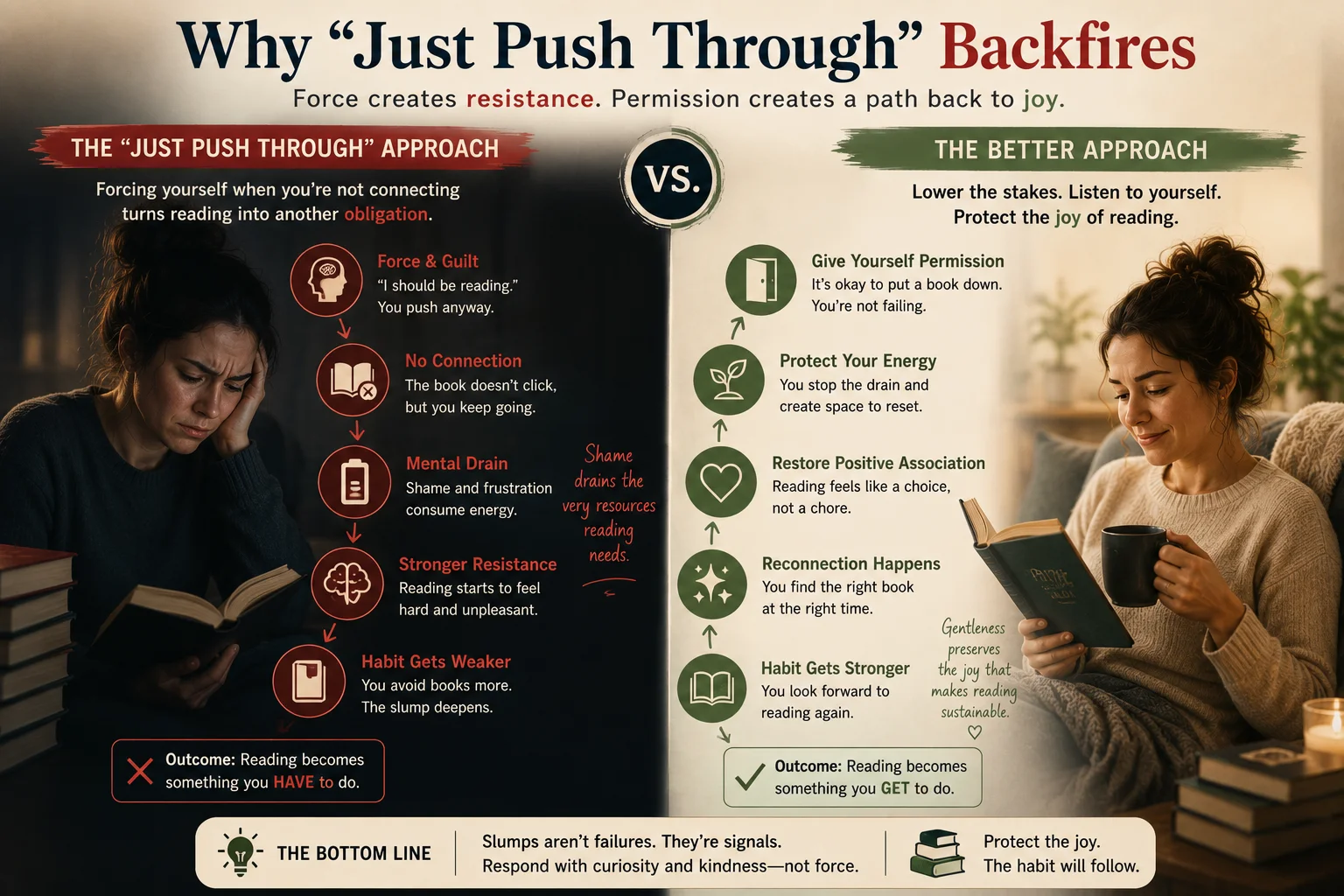
This is the part most existing advice gets wrong by omission: forcing yourself through a book you're not connecting with doesn't rebuild the habit, it actively reinforces the association between reading and obligation rather than pleasure. Psychology writers covering this pattern describe it plainly — beating yourself up over a slump only makes it worse, because shame is itself a drain on the same cognitive resources reading requires. The advice that actually works tends to lower the stakes rather than raise the discipline: permission to abandon a book that isn't working, rather than grinding through it out of guilt.
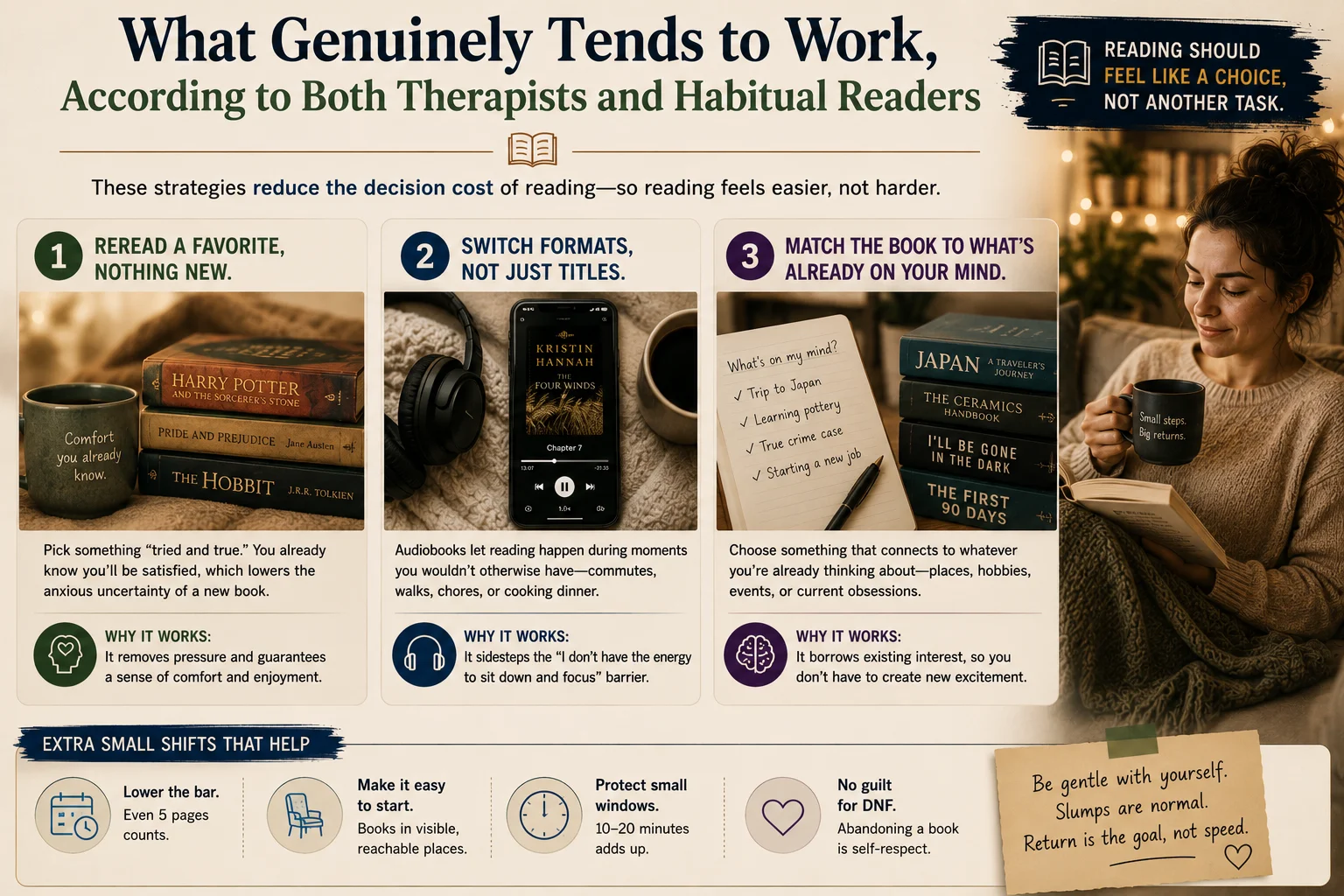
What genuinely tends to work, according to both therapists and habitual readers
A few specific strategies show up consistently across both clinical and reader-sourced advice, and they share a common thread worth naming: they all reduce the decision cost of reading, rather than trying to manufacture more willpower.
Rereading a favorite, rather than starting something new. Author Kirsty Greenwood recommends picking something "tried and true" specifically because it removes the anxious uncertainty of a new book — you already know you'll be satisfied, which lowers the emotional stakes of picking it up in the first place.
Switching formats, not just titles. Audiobooks let reading happen during moments that wouldn't otherwise be available for it at all — a commute, a walk, folding laundry — sidestepping the "I don't have the energy to sit down and focus" barrier entirely by attaching reading to an activity you're already doing.
Matching a book to what's already occupying your mental space. Rather than hunting for "the perfect next book" in the abstract, several sources suggest choosing something that connects to whatever's already genuinely occupying your thoughts — a place you're planning to visit, a hobby you're currently obsessed with, a real event on your mind. This works because it doesn't ask you to generate fresh enthusiasm from nothing; it borrows enthusiasm you already have for something else.
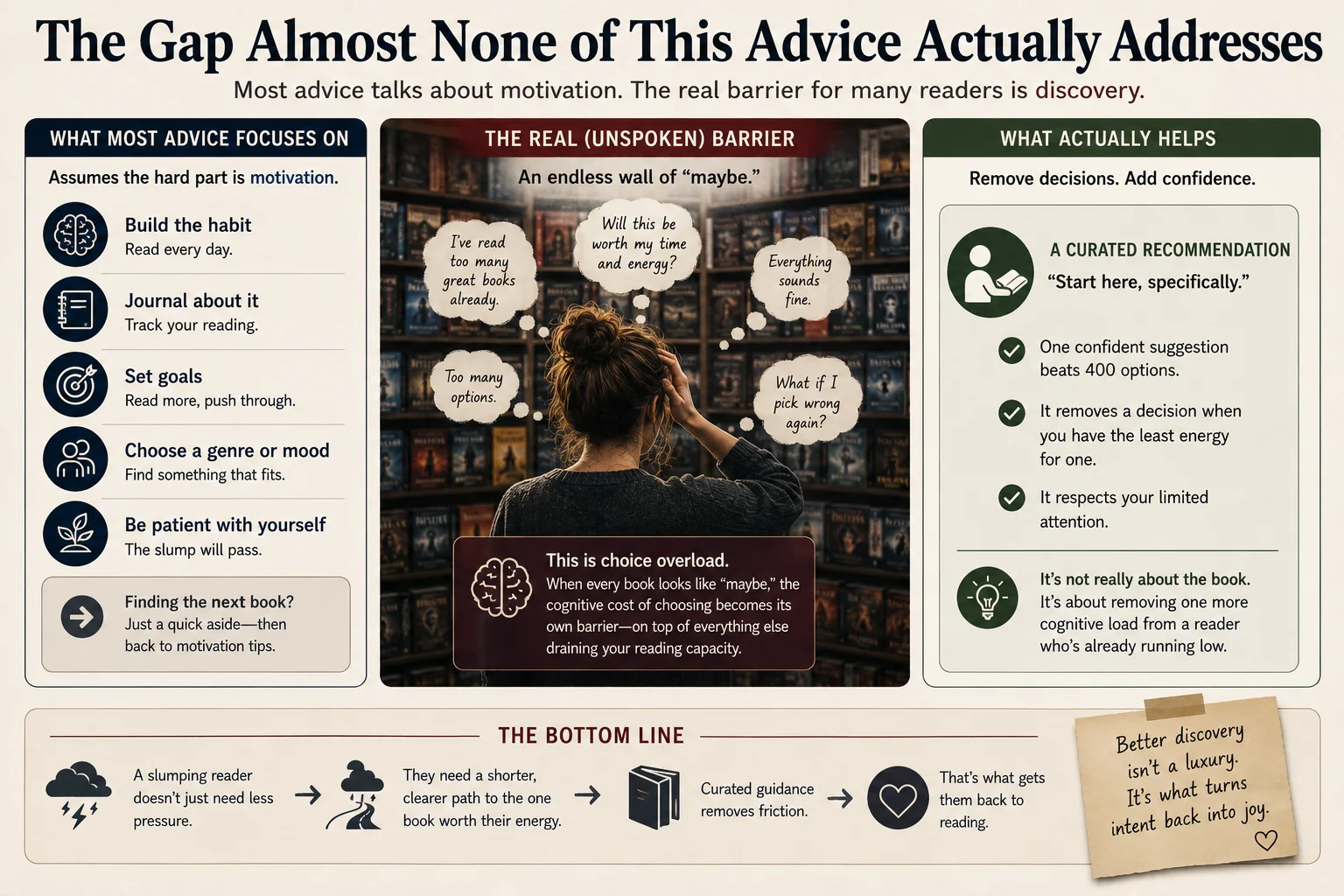
The gap almost none of this advice actually addresses
Here's where nearly every existing piece of reading-slump advice quietly stops short, and it's worth naming directly: almost all of it assumes the hard part is motivation, and treats finding the actual next book as a trivial afterthought — a quick aside about genre or mood, then back to tips about journaling or setting reading goals. But for a huge number of readers, the real barrier isn't willpower at all. It's standing in front of an endless, undifferentiated wall of options — a Kindle library, a bookstore, an algorithm's generic recommendation — with no confident signal about which one is actually worth the specific, limited cognitive energy discussed above.
This is the same discovery problem this space keeps circling back to, just showing up in a different, more personal form: when every book looks roughly the same amount of "maybe," the cognitive cost of even choosing becomes its own small barrier layered on top of everything else already draining your reading capacity. A slumping reader doesn't just need permission to read less pressured — they need a shorter, more confident path to the one book actually worth spending their limited attention on, rather than one more open-ended browse through a catalog that asks them to do the emotional labor of deciding all over again.
This is exactly why a curated recommendation — a real person or editorial process saying "start here, specifically" — tends to work better for breaking a slump than a broad "here are 400 highly-rated options" list ever does. It's not really about the book itself. It's about removing one more decision from a reader who's already running low on the exact resource decisions require.
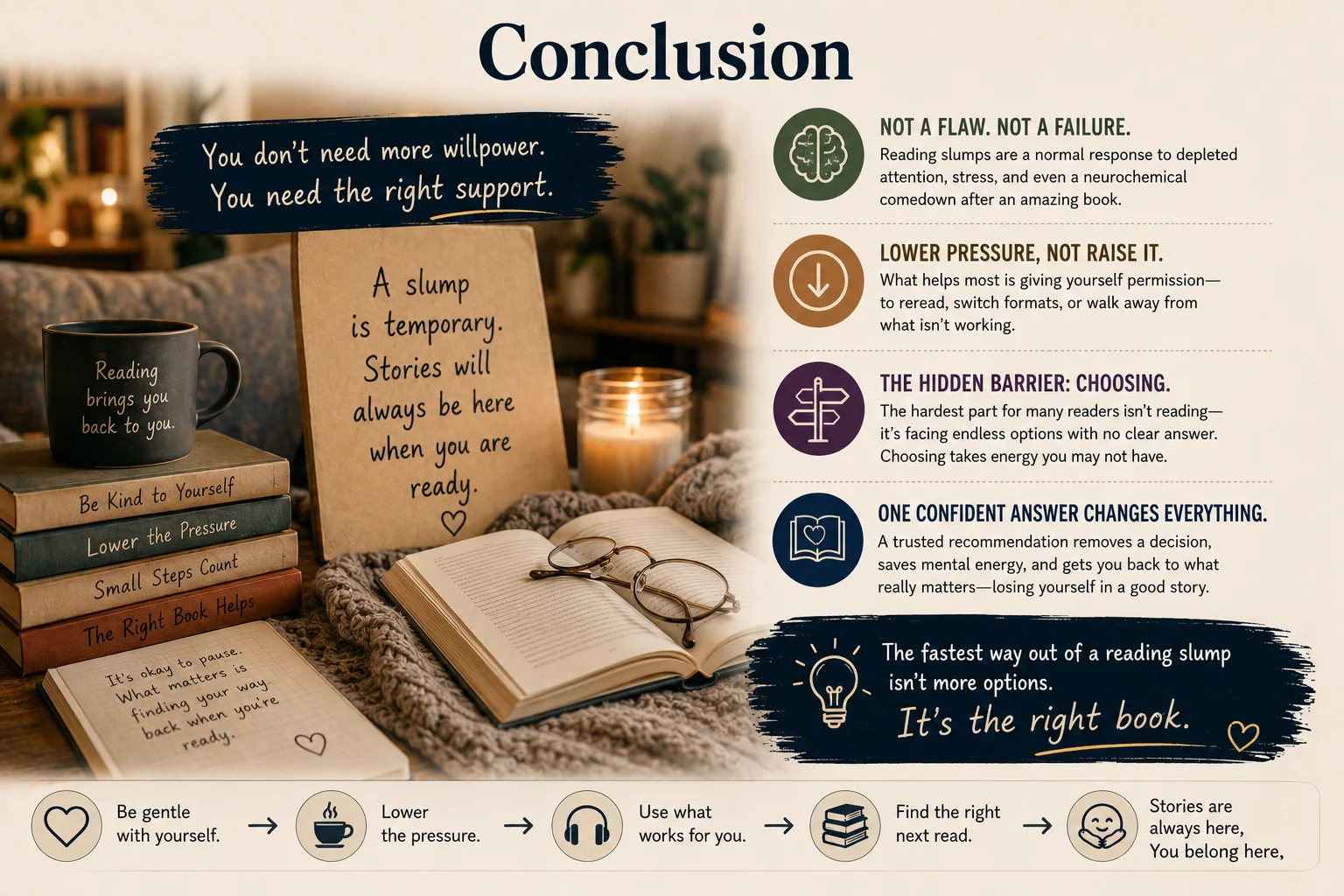
Conclusion
A reading slump isn't a character flaw, and it isn't cured by sheer willpower either — it's a genuinely predictable response to depleted attention, competing stress, and sometimes just the very real neurochemical comedown after finishing something extraordinary. The advice that actually works tends to lower pressure rather than raise it: permission to reread, permission to switch formats, permission to abandon what isn't working. But the piece most advice leaves out is the quiet cost of choosing in the first place — and for a lot of readers, the fastest way out of a slump isn't a longer list of options. It's one confident, specific answer to the question "what should I actually read next," offered by someone who's already done the deciding for you.
Share this article
Share this article with readers who'll want to read it.
You may also like

Some Readers Choose Audiobooks by Narrator, Not Author
August 8, 2026

What the Actual Research Says About Content Warnings on Books
September 8, 2026

What ARCs Actually Are (And Why 500,000 People Compete for Free Books)
August 3, 2026
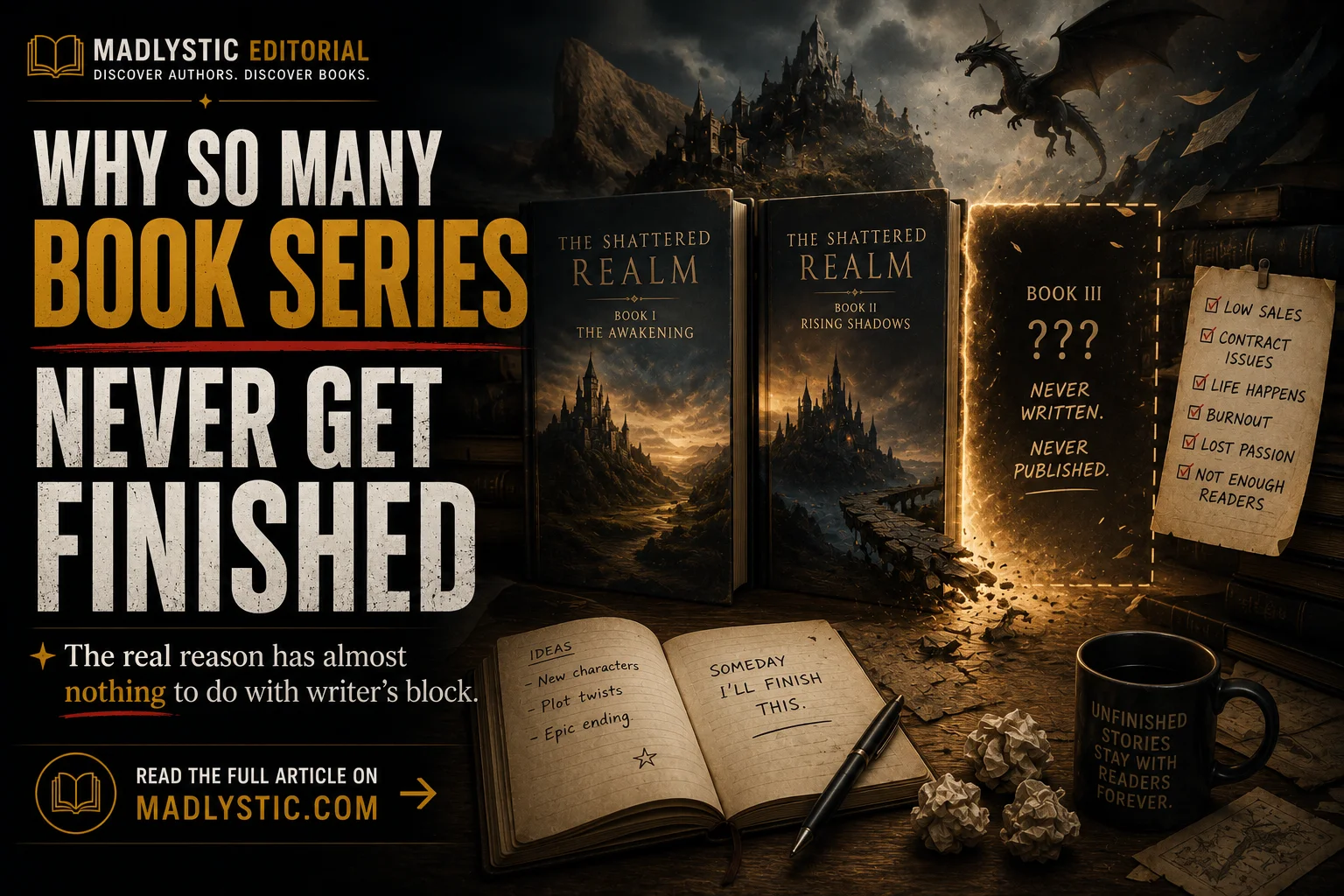
Why So Many Book Series Never Get Finished
July 30, 2026