How to Write an Unforgettable First Chapter
How to Write an Unforgettable First Chapter: The Complete Guide Discover how to write an unforgettable first chapter with expert tips on hooks, pacing, characters, conflict, and storytelling that keep readers turning pages.
Published July 9, 2026
Published by Madlystic Editorial Team | July 8, 2026
Estimated Reading Time: 18–22 Minutes
Introduction
Imagine walking into a bookstore filled with thousands of novels.
You pick up one book.
You read the first page.
Then you quietly place it back on the shelf.
Moments later, you pick up another novel.
Five pages become ten.
Ten become twenty.
Before you know it, you've bought the book.
What made the difference?
It wasn't the ending.
It wasn't the climax.
It wasn't even the plot twist.
It was the first chapter.
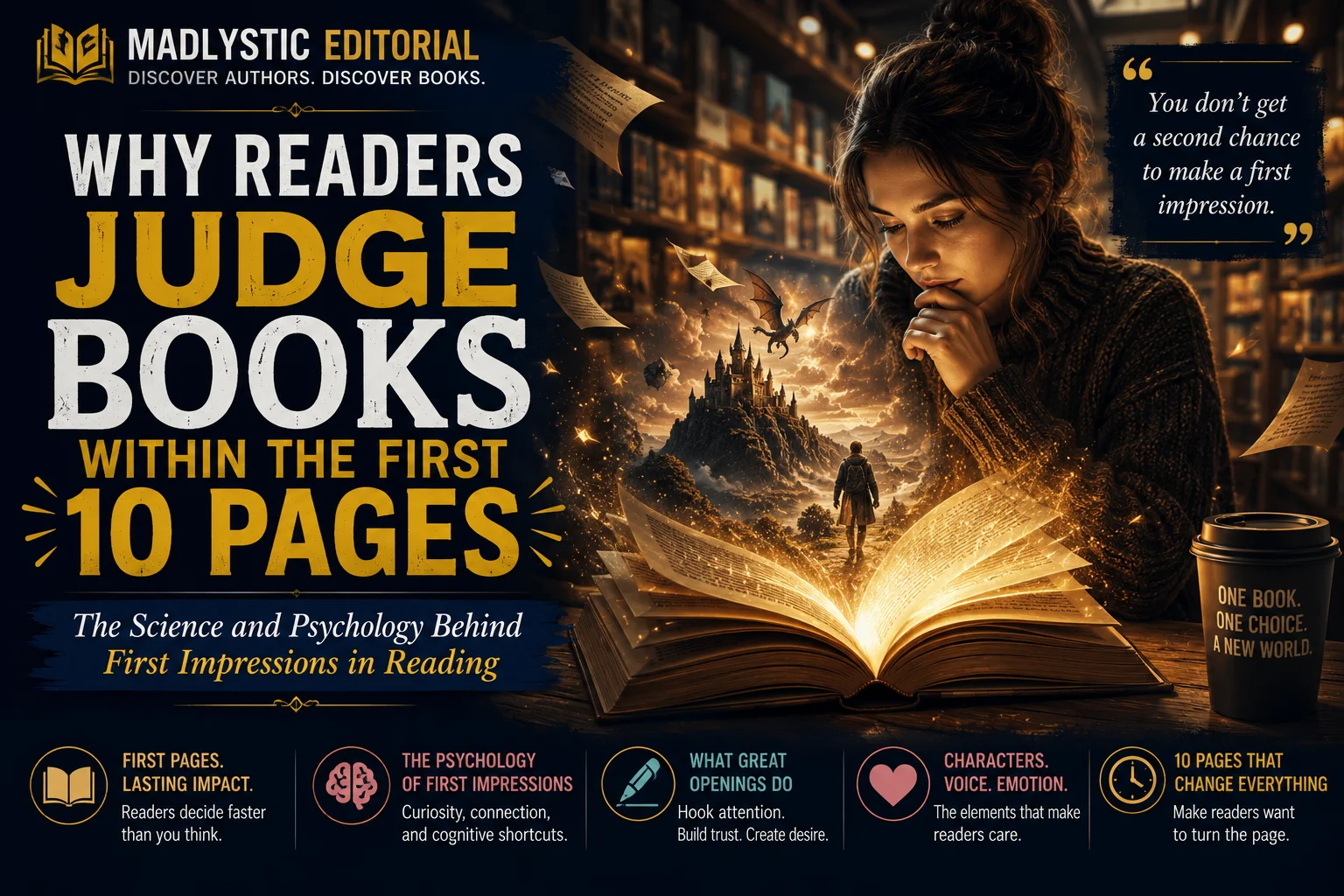
The opening chapter is arguably the most important part of any novel. It's your first impression, your handshake with the reader, and your opportunity to convince them that your story deserves their time.
Today's readers have endless choices. Whether they're browsing Amazon Kindle, Kobo, Apple Books, Goodreads, or a physical bookstore, they can move on to another book in seconds. A weak beginning often means losing a reader before the story has a chance to unfold.
So how do successful authors create openings that readers simply can't resist?
Let's break it down.
Why the First Chapter Matters More Than Ever
Years ago, readers might have purchased a book based on a recommendation or an author's reputation.
Today, readers often download a sample before buying.
Those sample pages are your audition.
Your first chapter has one goal:
Convince the reader to read Chapter Two.
Not reveal everything.
Not explain your world.
Not introduce every character.
Simply make readers curious enough to continue.
The Purpose of the First Chapter
Many new writers misunderstand the purpose of an opening.
The first chapter is not supposed to explain everything.
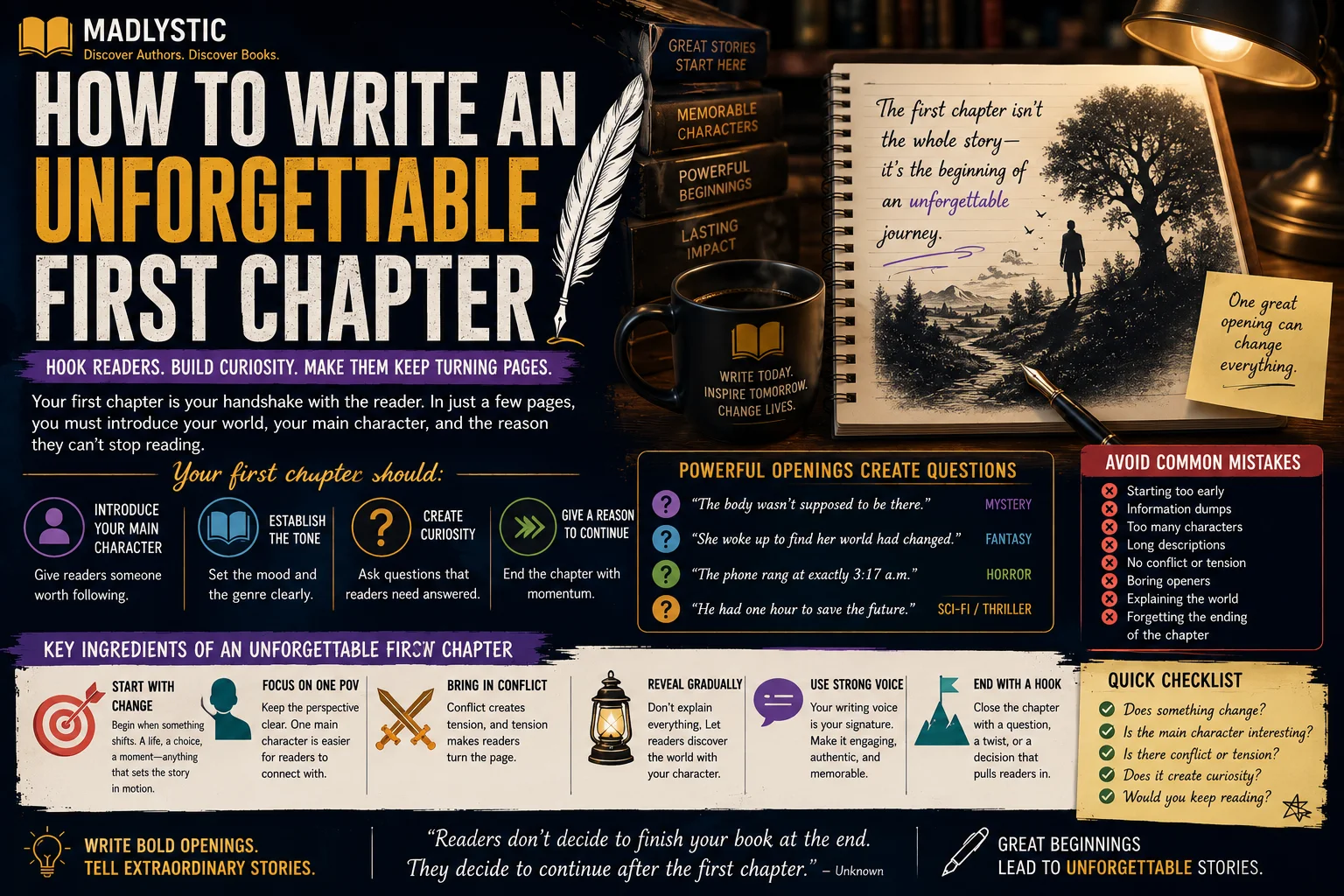
Instead, it should accomplish four things:
Introduce the main character.
Establish the tone.
Create curiosity.
Give readers a reason to continue.
Everything else can come later.
Start With Change
Stories begin when something changes.
Not when life is normal.
Imagine these openings:
Sarah woke up, brushed her teeth, ate breakfast, and went to work.
Nothing changed.
Now compare:
Sarah woke up to discover her apartment door standing open.
Immediately, readers ask:
Why?
Who entered?
Is she safe?
Questions create momentum.
Open With Curiosity, Not Confusion
Many writers mistake confusion for mystery.
Mystery makes readers curious.
Confusion makes readers frustrated.
Instead of hiding basic information, reveal enough to help readers understand the situation while leaving larger questions unanswered.
Good curiosity sounds like:
Who sent the letter?
Why is everyone afraid of the forest?
What happened last night?
Poor confusion sounds like:
Unknown characters discussing unexplained events in an unfamiliar world using invented terminology for several pages.
Readers need something familiar before exploring the unfamiliar.
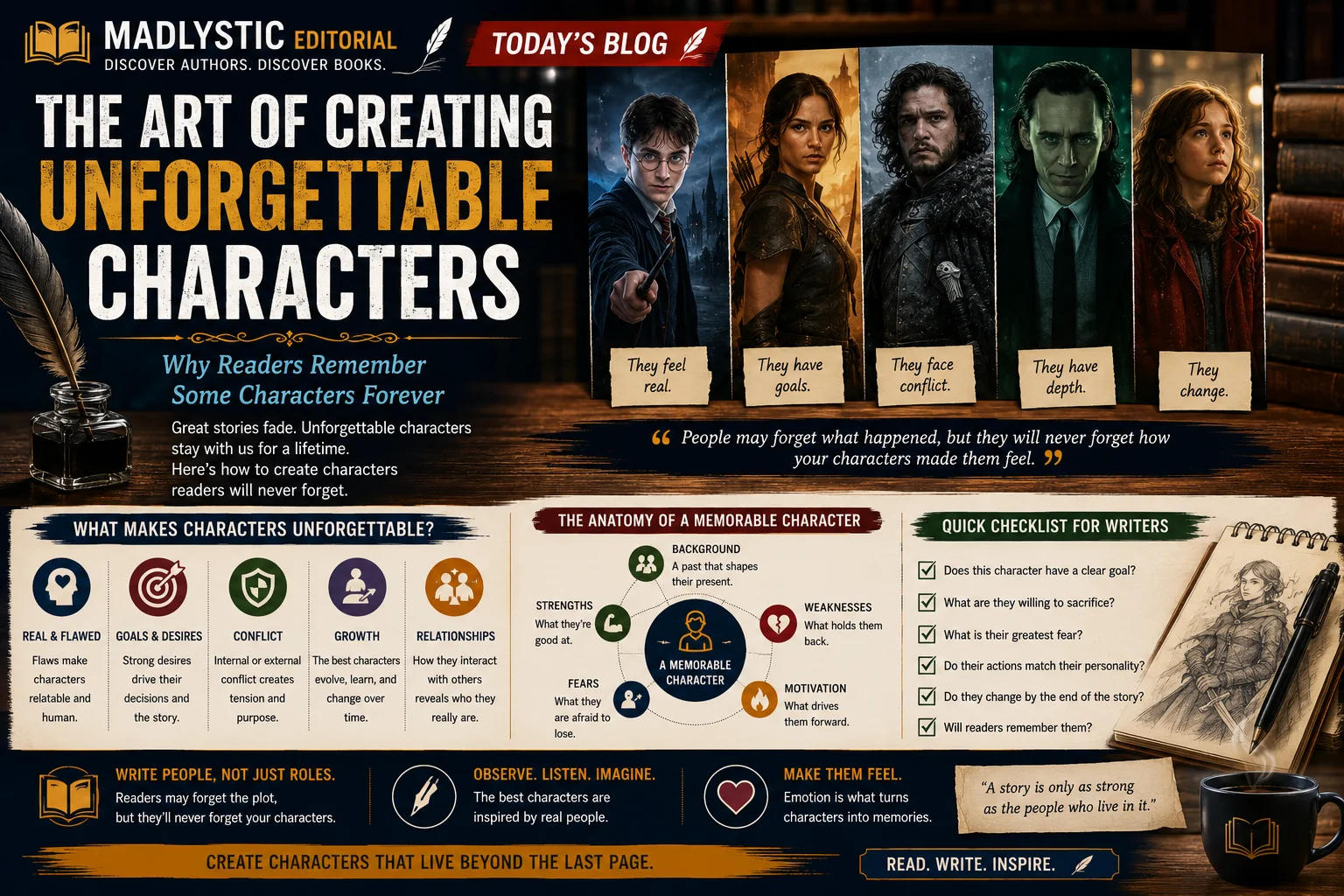
Introduce a Character Readers Care About
Readers don't fall in love with plots.
They fall in love with people.
Your protagonist doesn't need to be perfect.
In fact, flaws often make characters more relatable.
Readers care about characters who:
Want something.
Fear something.
Make mistakes.
Face difficult choices.
Feel authentic.
Give readers someone worth following.
Begin as Close to the Conflict as Possible
A common beginner mistake is spending several chapters preparing the story.
Readers don't need pages describing everyday routines.
Start where life changes.
Instead of:
Three chapters about school.
Begin with:
The day the school burns down.
Or:
The day the mysterious student arrives.
Conflict drives stories forward.
Give Readers Questions
Every great opening creates questions.
Examples:
Who killed the king?
Why is everyone lying?
Why can't she remember yesterday?
What is hidden beneath the city?
Questions are powerful because the human brain naturally wants answers.
Use that psychology.
Establish the Tone Immediately
Readers should quickly understand what kind of story they're reading.
Comedy?
Thriller?
Fantasy?
Romance?
Horror?
Your language, dialogue, pacing, and imagery all contribute to tone.
If your first chapter feels like comedy but your novel becomes horror, readers may feel misled.
Consistency builds trust.
Avoid the Information Dump
Many first chapters fail because they explain too much.
Readers don't need:
500 years of history.
Every political system.
The complete magic rules.
Twenty family members.
Instead:
Reveal information naturally.
Think of your story like a conversation.
People don't introduce themselves by reciting their life story.
Neither should your novel.
Show, Don't Lecture
Readers enjoy discovering your world.
Instead of writing:
"The kingdom had been at war for fifty years."
Show:
Children playing with broken swords.
Empty villages.
Soldiers returning home.
Scars on the landscape.
Readers remember experiences more than explanations.
Dialogue Can Create Immediate Energy
Good dialogue makes readers feel like they're entering a living world.
Instead of opening with long descriptions, consider beginning with an emotionally charged conversation.
Conflict within dialogue immediately creates momentum.
The Setting Should Support the Story
Setting isn't just background.
It influences mood.
A rainy abandoned train station creates different expectations than a sunny beach.
Choose settings that reinforce the emotional atmosphere of your opening.
Don't Introduce Too Many Characters
Readers struggle to remember large casts immediately.
Focus on:
One main character.
One supporting character.
One antagonist if necessary.
Introduce others gradually.
Clarity beats complexity.
Avoid Common Opening Clichés
Readers have seen these countless times:
❌ Waking up and getting ready.
❌ Looking in the mirror to describe appearance.
❌ Dream sequences.
❌ Long weather descriptions.
❌ Prologues explaining history.
❌ Massive world-building.
❌ Starting with a lecture.
These aren't always wrong—but they require exceptional execution.
Raise the Stakes Early
Readers don't need world-ending danger immediately.
They simply need something meaningful to the protagonist.
Small stakes can feel enormous if readers care.
End the Chapter With Momentum
Many writers focus only on the first page.
The last page matters just as much.
Great chapter endings create irresistible curiosity.
Examples:
A shocking discovery.
A difficult decision.
An unexpected visitor.
A betrayal.
A mysterious message.
The goal is simple:
Make Chapter Two impossible to ignore.
Study Great Openings
Read the first chapters of bestselling novels.
Ask yourself:
Why did this work?
When did I become interested?
What questions were created?
How much information was revealed?
Successful authors are excellent teachers.
Rewrite Your First Chapter Last
Many experienced writers don't perfect their opening until the novel is finished.
Why?
Because only after completing the story do they fully understand:
Their characters.
Their themes.
Their pacing.
Their ending.
Don't be afraid to rewrite your opening several times.
Test It With Beta Readers
Ask readers only one question:
Would you continue reading?
If the answer is no…
Ask why.
Their feedback is invaluable.
Practical Checklist
Before publishing, ask yourself:
✔ Does something change?
✔ Is there conflict?
✔ Is the main character interesting?
✔ Does the chapter create curiosity?
✔ Is the pacing engaging?
✔ Is the genre obvious?
✔ Are there unnecessary explanations?
✔ Would you keep reading?
Common Mistakes First-Time Authors Make
Starting too early.
Explaining instead of showing.
Too many characters.
Slow pacing.
No conflict.
Weak dialogue.
Confusing world-building.
No emotional investment.
Predictable opening.
Forgettable ending to the chapter.
Avoiding these mistakes instantly improves your opening.
Examples of Powerful Opening Hooks
Different genres call for different kinds of hooks.
Mystery
"The body wasn't supposed to be there."
Thriller
"By the time the phone rang, everyone in the house was already dead—except her."
Fantasy
"The dragon arrived three days earlier than the prophecy promised."
Science Fiction
"Earth received the message exactly twelve minutes after humanity declared itself alone."
Romance
"She was about to marry the wrong man when someone from her past walked into the church."
Horror
"Every night at exactly 3:17 a.m., someone knocked on the door."
Notice that each opening creates an immediate question.
The Emotional Hook
Readers remember how a story makes them feel, not just what happens.
Your first chapter should evoke at least one strong emotion:
Curiosity
Fear
Hope
Wonder
Excitement
Sympathy
Surprise
Emotion creates connection, and connection keeps readers turning pages.
Final Thoughts
A memorable first chapter doesn't rely on explosions, shocking twists, or dramatic action. It succeeds because it gives readers a reason to care. It introduces a compelling character, hints at meaningful conflict, establishes the story's tone, and leaves just enough unanswered questions to spark curiosity.
Remember, your goal isn't to tell the entire story in the opening. It's to begin a conversation with the reader—one they'll want to continue.
Every bestselling novel starts with a single chapter.
Take the time to make yours unforgettable.
Because readers may forget a clever sentence or a beautiful description.
But they'll always remember how a great beginning made them feel.
Key Takeaways
📖 Hook readers in the first few pages.
🎭 Introduce an interesting protagonist.
⚔️ Start with change and conflict.
❓ Create curiosity without causing confusion.
🧠 Show instead of explaining.
💬 Use dialogue to build momentum.
🌍 Reveal the world gradually.
🏁 End the chapter with a compelling reason to keep reading.
Share this article
Share this article with readers who'll want to read it.