
The Narrator Was Lying to You the Whole Time — On Purpose
Gone Girl. Fight Club. The Tell-Tale Heart. Some of fiction's most memorable books work because you can't trust the person telling you the story. Here's the real mechanics behind why unreliable narrators exist — and why readers keep coming back for the betrayal.
Published August 12, 2026
8 min read
Quote of the Day
"The narrator ignorantly or intentionally offers inaccurate information that misleads or confuses the reader." — a plain, working definition of one of fiction's oldest tricks
There's a specific kind of betrayal readers actively seek out, pay for, and recommend to friends afterward: finishing a book only to realize the person telling you the story wasn't telling you the truth. It's called an unreliable narrator, and understanding how it actually works — the real mechanics behind why it lands, and why it's existed far longer than most readers assume — makes the trick land even harder the next time an author pulls it.
A device older than the term itself
The phrase "unreliable narrator" wasn't coined until 1961, when literary critic Wayne C. Booth introduced it in his book The Rhetoric of Fiction — but the technique itself is dramatically older than its name. Scholars point to examples stretching back to Chaucer's The Canterbury Tales and even certain Greco-Roman plays, long before anyone had formally named what was happening. Edgar Allan Poe's 1843 story "The Tell-Tale Heart" is one of the clearest early examples in modern literature: a narrator recounting a brutal murder while insistently, repeatedly proclaiming his own sanity — the gap between what he claims and what he's actually describing doing all the story's real work.
The core mechanism: the narrator is your only window, and something's wrong with the glass
Every work of first-person fiction asks readers to trust a fundamental, usually invisible contract: the narrator is our guide through a world that exists only in the author's imagination, and we generally accept their account of it without question, the same way we'd trust a tour guide describing a building we can't see for ourselves. An unreliable narrator breaks that contract — sometimes immediately and obviously, sometimes gradually, as small contradictions accumulate until a reader starts questioning everything they thought they understood.
Not every unreliable narrator is lying on purpose
This is the detail most casual readers miss: unreliability comes in genuinely different flavors, and deliberate deception is only one of them. Writing coach Amanda Patterson's breakdown of narrator types distinguishes several: the willful liar, who deliberately deceives readers and hides information — Briony Tallis in Atonement, Theo Faber in The Silent Patient; and an entirely separate category of narrators who aren't lying at all, but are simply incapable of full reliability — the insane, the intoxicated, the very young, the naive, or, in some of literature's stranger examples, the literally dead, as in the ghost-narrators of The Lovely Bones or Lincoln in the Bardo. The distinction matters: a deliberately lying narrator creates a very different reading experience than a narrator who genuinely, innocently believes their own distorted version of events.
Why readers love being deceived, when they'd hate it in real life
There's a real tension worth naming directly: nobody enjoys being lied to in ordinary life, yet a well-executed unreliable narrator is one of fiction's most beloved, most re-read devices. Author Kristen Lamb frames the appeal plainly — deep down, audiences love the deception, and points to M. Night Shyamalan's career-making twist in The Sixth Sense as proof: if audiences genuinely hated being fooled, that reveal wouldn't have become one of cinema's most iconic moments. The pleasure isn't in being deceived exactly — it's in the specific, satisfying experience of a story rewarding a second look, of realizing every clue was there all along, quietly visible, if only you'd been reading closely enough the first time.
The genre where this device does its most reliable work
Unreliable narration shows up across literary fiction broadly, but it has a particularly strong, functional home in mystery, thriller, and crime fiction specifically — genres built entirely around the tension of not knowing who to trust. Gillian Flynn's Gone Girl remains one of the clearest modern examples: multiple narrators, each with a genuine, specific motive to lie about their own culpability in a disappearance, turning the reader's uncertainty about who's telling the truth into the book's entire engine. Alex Michaelides's The Fury does something similar on a smaller scale, keeping readers genuinely unsure whether the narrator is being fully honest about a murder that's already happened by the time the story opens.
Why writing one well is genuinely harder than it looks
Author Kristen Lamb makes a craft point worth taking seriously: pulling this off convincingly takes real skill, tenacity, and — her word — bravado, because the author has to manage deception the way a magician manages a trick, knowing exactly when to conceal information and when to let just enough slip that an attentive reader can eventually piece the truth together themselves. Get the balance wrong in one direction, and the twist feels like a cheat, arbitrary information withheld purely to manufacture surprise rather than earned through legitimate ambiguity. Get it wrong in the other direction, and the reveal lands as obvious, telegraphed too early to actually land as a genuine turn.
Conclusion
The unreliable narrator works because it exploits something readers do automatically and rarely notice they're doing: extending trust to whoever's telling the story, the same reflexive trust you'd extend to a stranger giving you directions. A skilled author uses that reflex deliberately, letting a reader walk confidently down a path that was never quite what it appeared to be, and then rewarding them, rather than punishing them, for having believed it. It's one of the rare tricks in storytelling where being fooled is the actual point — and where the best response, once the truth surfaces, isn't feeling cheated. It's wanting to go back to page one and see exactly how you were played.
Share this article
Share this article with readers who'll want to read it.
You may also like
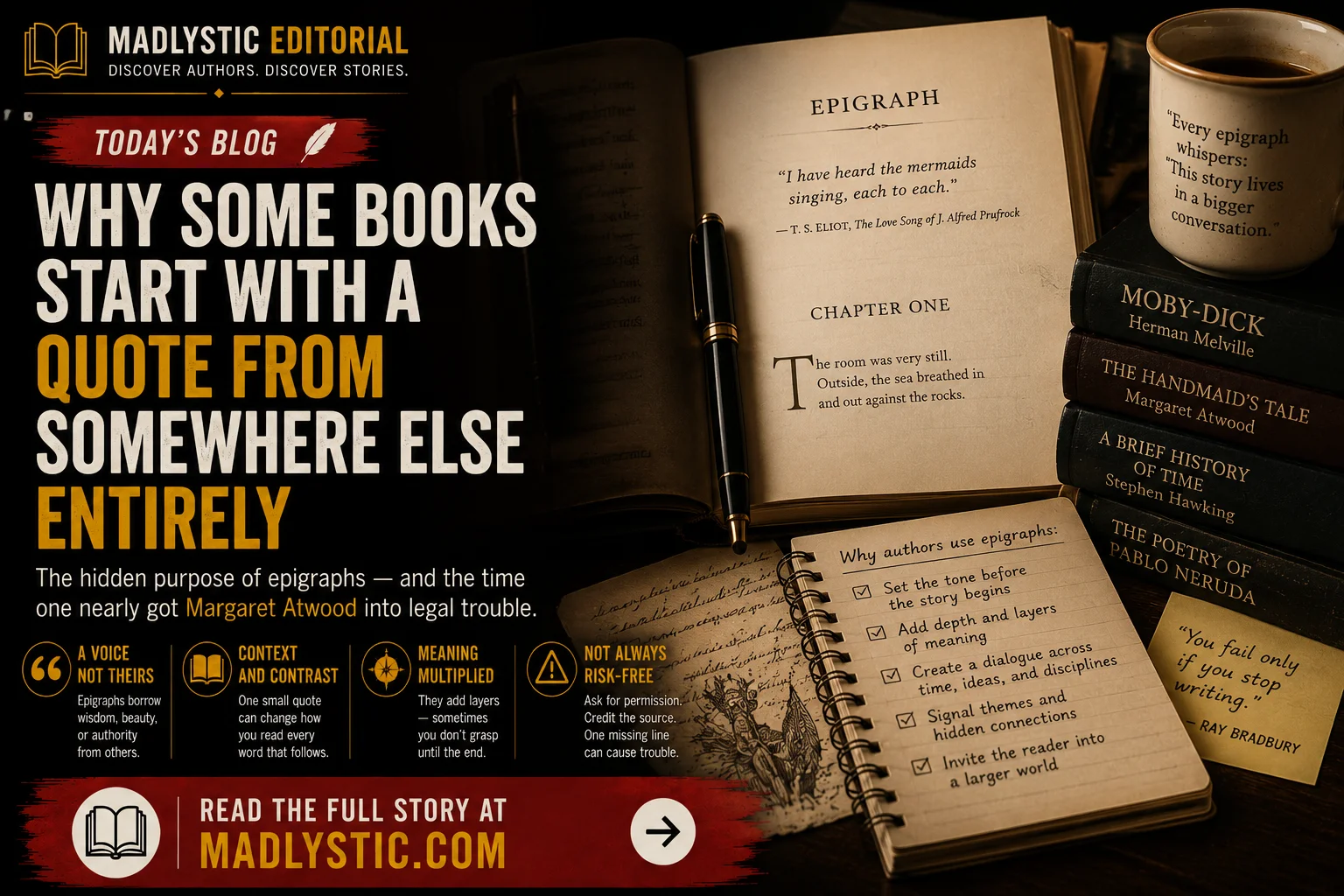
Why Some Books Start With a Quote From Somewhere Else Entirely
August 9, 2026

Book Dedications Used to Be a Matter of Survival
September 3, 2026
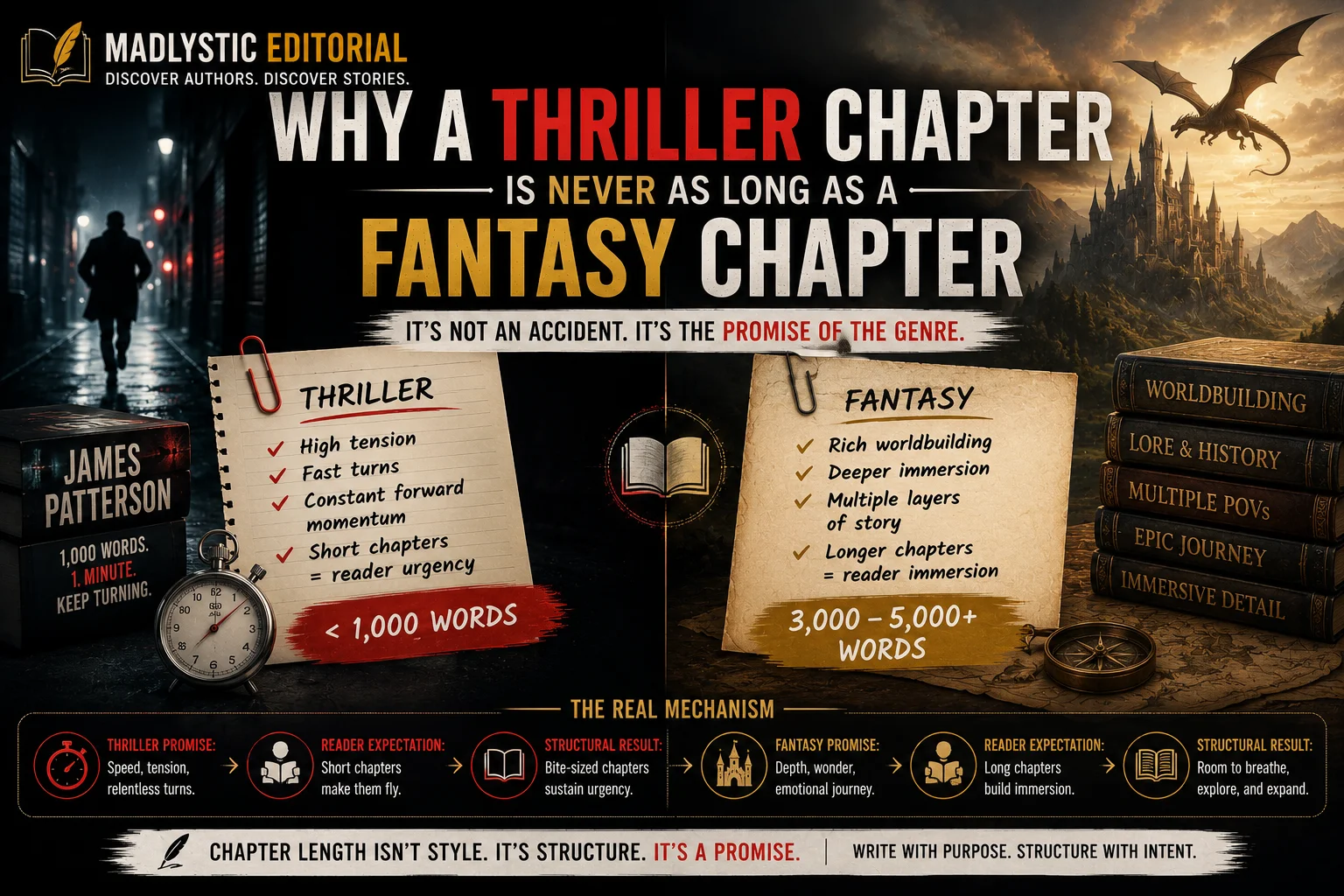
Why a Thriller Chapter Is Never as Long as a Fantasy Chapter
August 24, 2026

Why Literary Agents Say They Hate Prologues (But Keep Signing Books That Have Them)
August 12, 2026