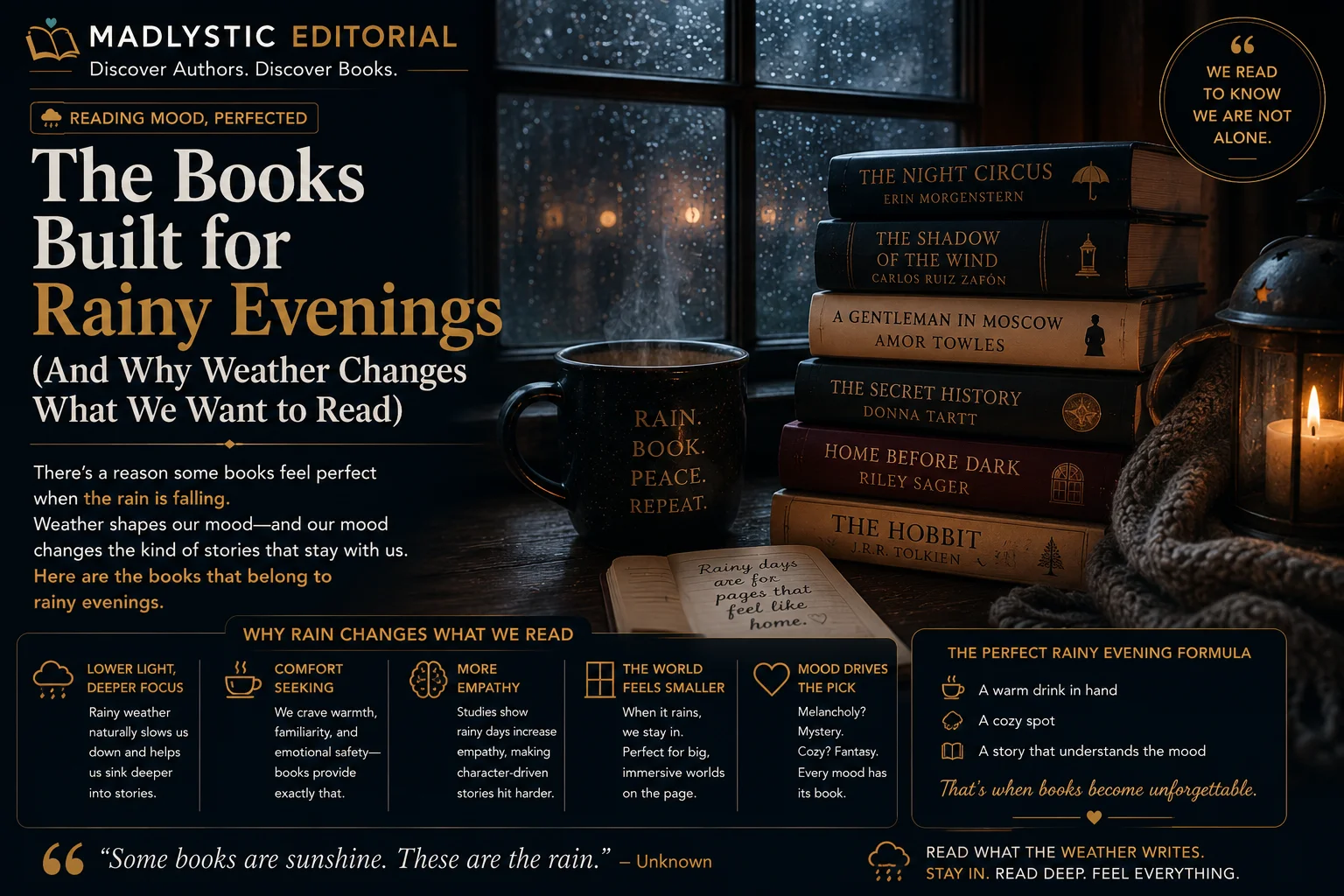
The Books Built for Rainy Evenings (And Why Weather Changes What We Want to Read)
There's a reason a thriller feels wrong on a rainy evening and a slow, atmospheric novel feels exactly right. Here's what rain actually does to reading taste — and a shelf of books built for exactly this kind of night.
Published July 19, 2026
8 min read
Quote of the Day
"There's no such thing as bad weather, only unsuitable books for it." — a small twist on the old Scandinavian saying about weather and clothing, borrowed here for readers instead.
There's a specific kind of evening this is written for. Rain against a window, the kind of grey light that makes 6 p.m. feel like 9, a cup of something warm going lukewarm beside you because you haven't wanted to get up. On a night like this, most books don't feel right. A frantic thriller feels loud. A hustling business memoir feels like it's shouting from another room. What you actually want is narrower than "a good book" — it's a book that matches the weight of the air outside.
Why rain changes what we want to read
This isn't just a mood — there's something real underneath it. Rain slows the nervous system down in a fairly literal way: the sound itself falls into a frequency range close to white noise, which the brain processes as calming rather than alerting. Combine that with lower light and the instinct to stay physically still, and you get a state that's genuinely different from an ordinary Tuesday afternoon. You're not just in a different mood. You're closer to the kind of slow, absorbed attention that certain books are built to reward and certain books actively fight against.
This is why the same reader who devours a fast-paced airport thriller on a plane will, on a rainy night at home, reach instead for something with room to breathe — a book that trusts you to sit in a scene a little longer than strictly necessary, that isn't afraid of a paragraph with no dialogue in it, that lets atmosphere do as much work as plot. Neither instinct is wrong. They're just tuned to different weather.
What actually works on a night like this
A few honest categories, rather than a generic list:
Slow-burn romance and interiority. Books that spend real time inside a character's hesitation — the ones critics sometimes call "quiet" as though it's a flaw — come into their own here. A rainy evening is one of the few times a reader has genuine patience for a relationship that takes three hundred pages to admit anything.
Gothic and atmospheric fiction. There's a reason gothic novels are so often set in rain, fog, and old houses with creaking floors — the genre and the weather were built for each other. A rainy evening is the one time a slow-building sense of dread actually feels cozy rather than stressful, because you're safe and dry while reading about someone who very much isn't.
Mythological and epic retellings. Something with scale and unhurried structure — an old story told at a new angle — suits an evening with nowhere to be. These books ask for the kind of sustained attention that a bright, busy afternoon rarely offers, but a dim, rain-soft evening hands you for free.
Short story collections and poetry. Counterintuitively, this is also the ideal night for something you can put down after twenty minutes without losing the thread — because sometimes what a rainy evening actually wants isn't a five-hundred-page commitment, just permission to read slowly and stop whenever the tea runs out.
Why this matters for how books get discovered
There's a real gap in how most book discovery works: platforms overwhelmingly sort by genre and bestseller status, and almost never by mood or occasion, even though most readers actually choose their next book based on how they feel in that specific moment far more than by category alone. "Give me a rainy-day book" is one of the most common informal requests readers make to friends, in forums, and now increasingly to AI chatbots — and yet it's one of the hardest things to actually search for on a traditional retailer, where filtering by genre tells you nothing about whether a book suits a quiet, unhurried mood.
This is part of what curated, human-picked shelves are actually good for — not replacing genre browsing, but adding the layer genre alone can't provide. A shelf built around mood or moment, the way Madlystic's Editor's Choice and Genre Spotlight placements aim to work, is trying to answer a different question than "what's popular in fantasy right now." It's trying to answer "what's right for tonight" — which is, for a lot of readers on a lot of evenings, the only question that actually matters.
Conclusion
Weather is a strange, underrated editor. It quietly decides what we're in the mood for before we've consciously thought about it — turning down our appetite for urgency and turning up our patience for stillness, atmosphere, and slowness. A rainy evening doesn't ask for the biggest book, or the most talked-about one. It asks for the right one, which is a much smaller and much more personal category. If tonight is a night like that, the best advice isn't a list of bestsellers — it's permission to reach for something quiet, unhurried, and a little strange, and let the rain do the rest of the pacing for you.
Share this article
Share this article with readers who'll want to read it.
You may also like
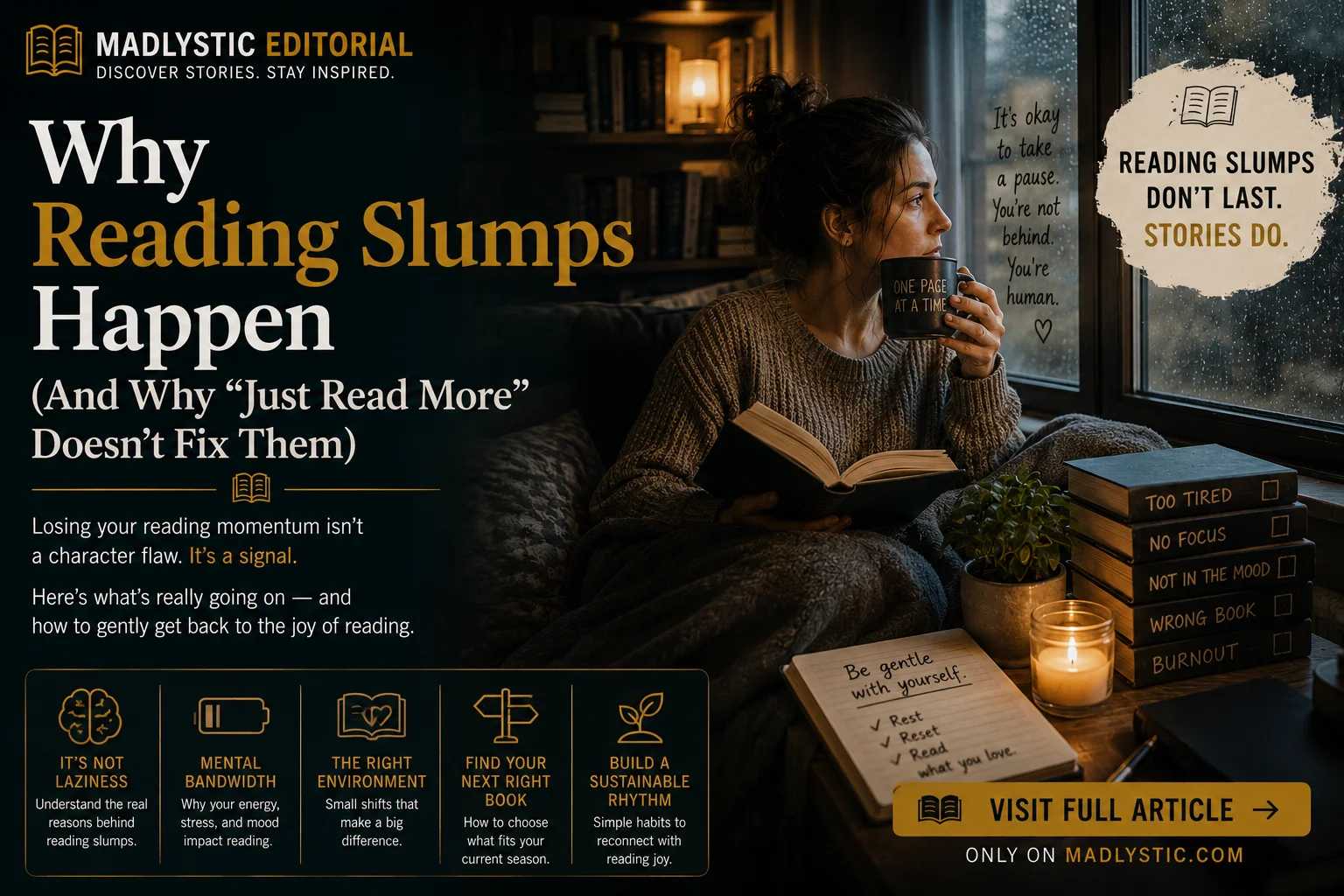
Why Reading Slumps Happen (And Why "Just Read More" Doesn't Fix Them)
July 23, 2026
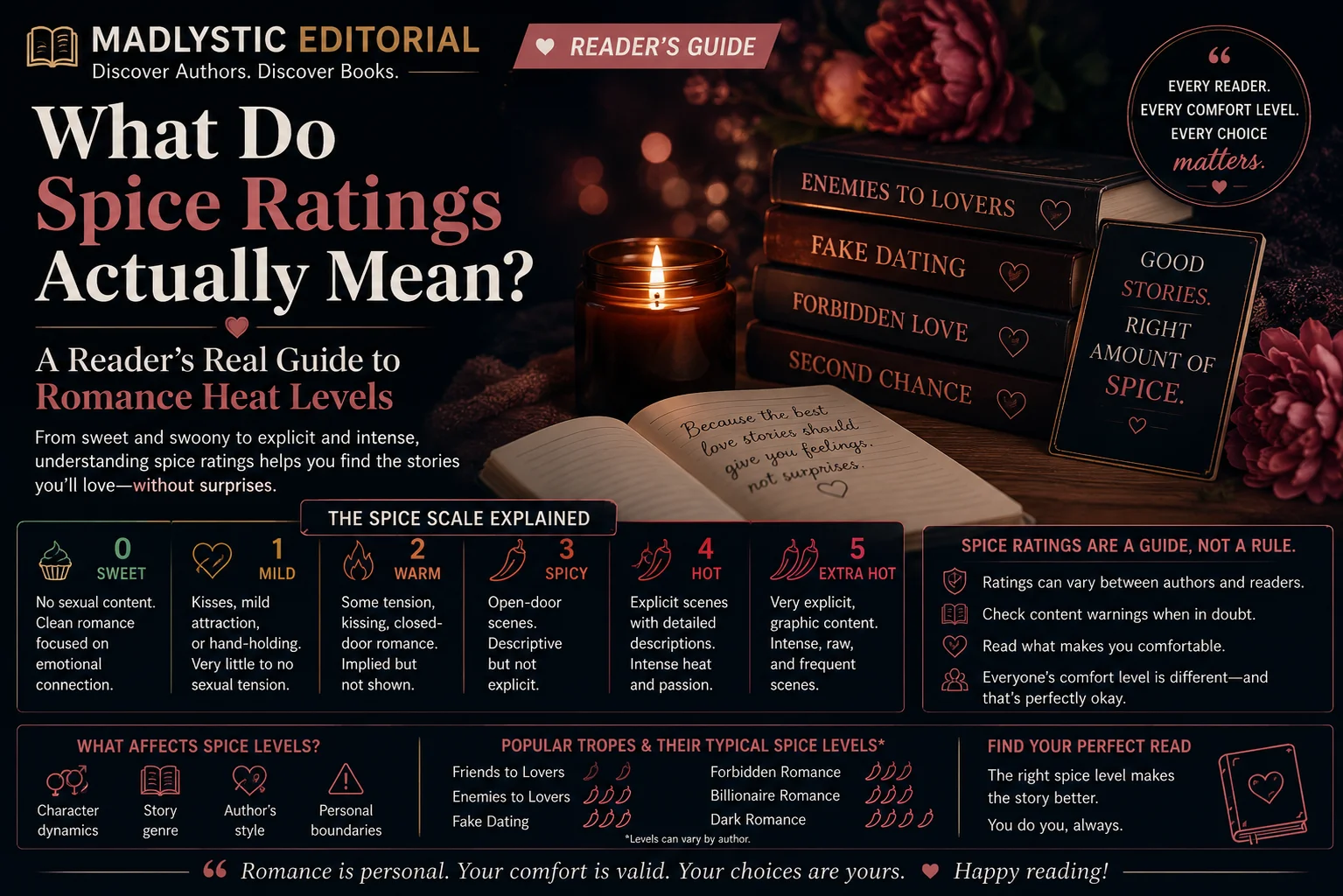
What Do Spice Ratings Actually Mean? A Reader's Real Guide to Romance Heat Levels
July 19, 2026

Goodreads Choice Awards 2026: Final Round Voting Dates
November 24, 2026

Traditional Publishing vs. Self-Publishing: Which Is Right for You?
November 24, 2026