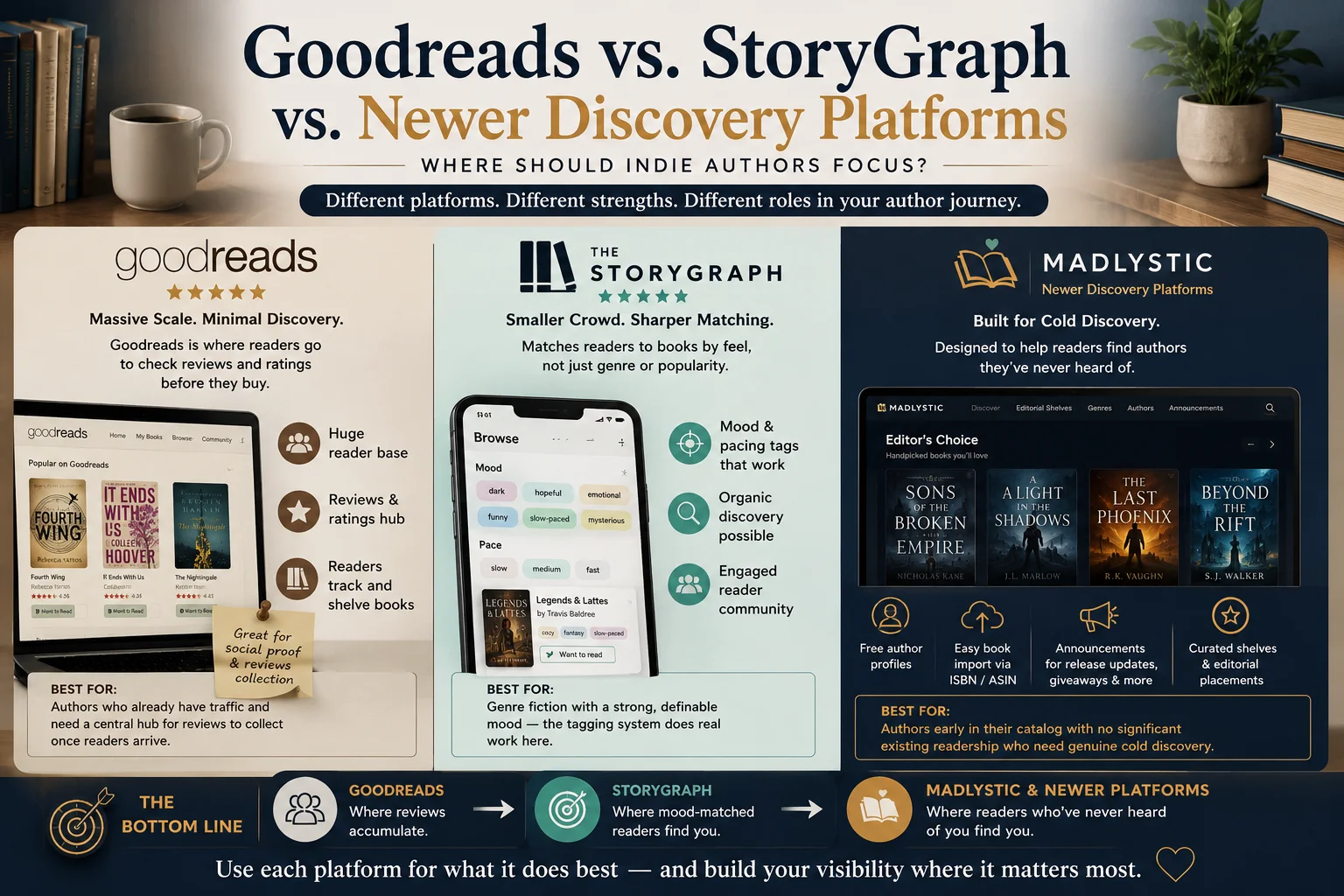
Goodreads vs. StoryGraph vs. Newer Discovery Platforms: Where Should Indie Authors Focus?
A balanced look at where readers actually discover indie books today — Goodreads, StoryGraph, and newer platforms — and which one deserves your limited time and energy.
Published July 18, 2026
Reading Time: 10–15 Minutes
Article Body:
Every indie author hits the same wall eventually: you can write a genuinely good book and still have almost no way for a stranger to find it. Where you spend your limited marketing time — Goodreads, StoryGraph, or one of the newer discovery platforms — depends on which part of that wall you're trying to break through. They're not interchangeable, and they're not really competitors either. Each solves a different piece of the problem.
Goodreads: massive scale, minimal discovery
Goodreads' advantage has never been its interface — it's the sheer number of readers already logged in, shelving books, and checking ratings before they buy.
But it's worth being precise about what Goodreads actually does. It functions more like a destination after discovery than a discovery engine itself. Readers usually arrive because they already encountered a book elsewhere — through Amazon, BookTok, BookTube, a newsletter, a bookstore table, or a friend's recommendation — and then use Goodreads to check ratings, reviews, and reading lists before deciding to buy. The finding happens somewhere else; Goodreads is where the decision gets confirmed.
That's a double-edged reality for indie authors. Its recommendation engine surfaces what's already popular, so a debut title with twelve reviews is competing for attention against books with twelve thousand. Reviews accumulate here — but the visibility that gets a reader there in the first place has to be earned somewhere else first.
Best for: authors who already have traffic (newsletter, social following, ARC team) and need a central hub for reviews and social proof to collect once readers arrive.
StoryGraph: smaller crowd, sharper matching
StoryGraph exists because Goodreads' gaps got frustrating enough that someone built an alternative from scratch. Its mood and pacing tags — "slow-paced," "dark," "hopeful" — do something Goodreads never bothered to: match readers to books by feel, not just genre or popularity.
That makes StoryGraph quietly good for indie discovery, if your book has a clear tonal identity. A well-tagged cozy fantasy or slow-burn romance can surface to the right reader here even with zero existing following, because the matching is organic rather than popularity-weighted.
Worth noting: StoryGraph's recommendation engine is only as strong as the data behind it. It gets sharper as a reader logs more books and preferences over time — for a completely new user with a thin reading history, there's simply less for the system to work with yet. And its overall user base is still a fraction of Goodreads', so the ceiling on total reach is lower.
Best for: genre fiction with a strong, definable mood — the tagging system does real work here that Goodreads' system doesn't attempt.
The actual gap: cold discovery
Here's what neither platform is built to solve. Goodreads confirms a decision a reader already made elsewhere. StoryGraph gets better at matching a reader to books the longer they use it. Neither one is designed to solve the harder problem: putting a book in front of a reader who has never heard of the author and isn't searching for them by name at all. Both are review-and-tracking tools first. Discovery is a byproduct of their design, not the goal of it.
That gap is exactly what a newer wave of discovery platforms is trying to close — helping readers encounter authors they weren't already looking for, rather than organizing opinions about authors they'd already found. Instead of ranking by review volume or engagement history, these platforms lean on human curation: editorially chosen shelves, genre spotlights, and daily picks that surface an unknown book because someone chose to put it in front of readers, not because it accumulated enough reviews to earn the algorithm's attention.
Madlystic is one attempt at this. It gives authors a free profile with no subscription tier gating basic visibility, book import via ISBN/ASIN in minutes rather than manual entry, and the ability to post announcements directly to readers without needing an existing newsletter. On the reader side, curated shelves — Editor's Choice, Hidden Gems, Genre Spotlight, Staff Picks — sit alongside placements like Book of the Day and Trending Now, chosen editorially or by genuine engagement rather than something an author can simply buy their way onto.
The honest tradeoff: this is a newer, smaller ecosystem than Goodreads or StoryGraph, so it doesn't carry a decade of built-in reader traffic yet. What it offers instead is less noise, and a discovery path built specifically for authors who don't have an existing following to leverage — which is the exact problem most indie authors are actually stuck on.
Best for: authors early in their catalog with no significant existing readership, who need genuine cold discovery rather than a place to consolidate reviews they already have.
Where this leaves you
Most authors will end up using more than one, because each solves a different stage of the same problem:
Goodreads — where reviews and ratings accumulate once a reader has already found you
StoryGraph — where genre- and mood-matched readers find you organically over time
Madlystic (and platforms like it) — where readers who've never heard of you find you at all
The mistake is treating these as one decision. They're not competing for the same job. For most indie authors starting out, cold discovery — not review volume — is the harder problem, and it's the one worth solving first.
The smartest strategy isn't choosing one platform and ignoring the rest.
Use Goodreads to build credibility.
Use StoryGraph to reach readers who care about mood and reading preferences.
Use newer discovery platforms to help people find you before they've ever heard your name.
Discovery doesn't happen in one place anymore. The authors who understand that will have the greatest advantage over the next few years.
Share this article
Share this article with readers who'll want to read it.
You may also like
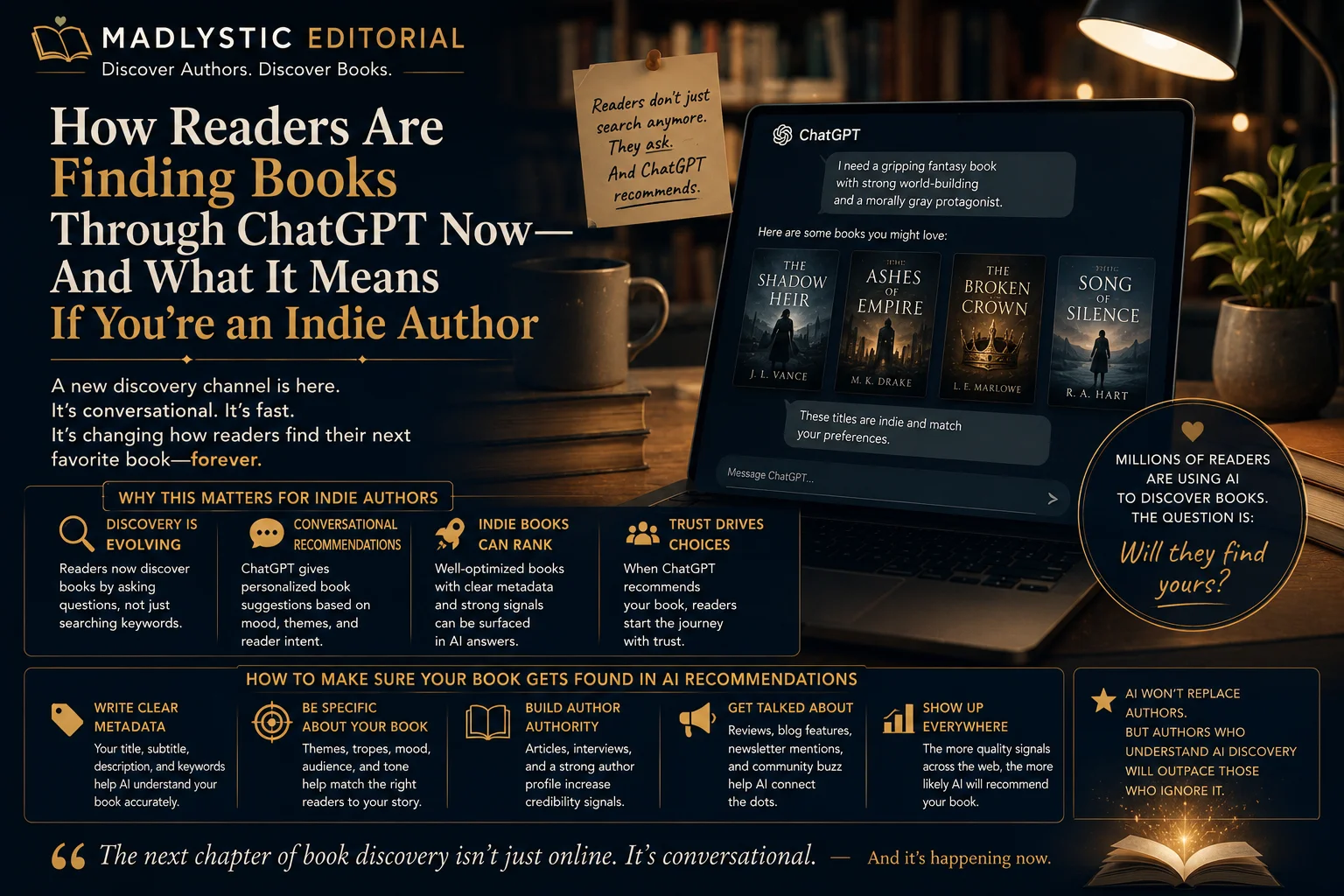
How Readers Are Finding Books Through ChatGPT Now — And What It Means If You're an Indie Author
July 19, 2026
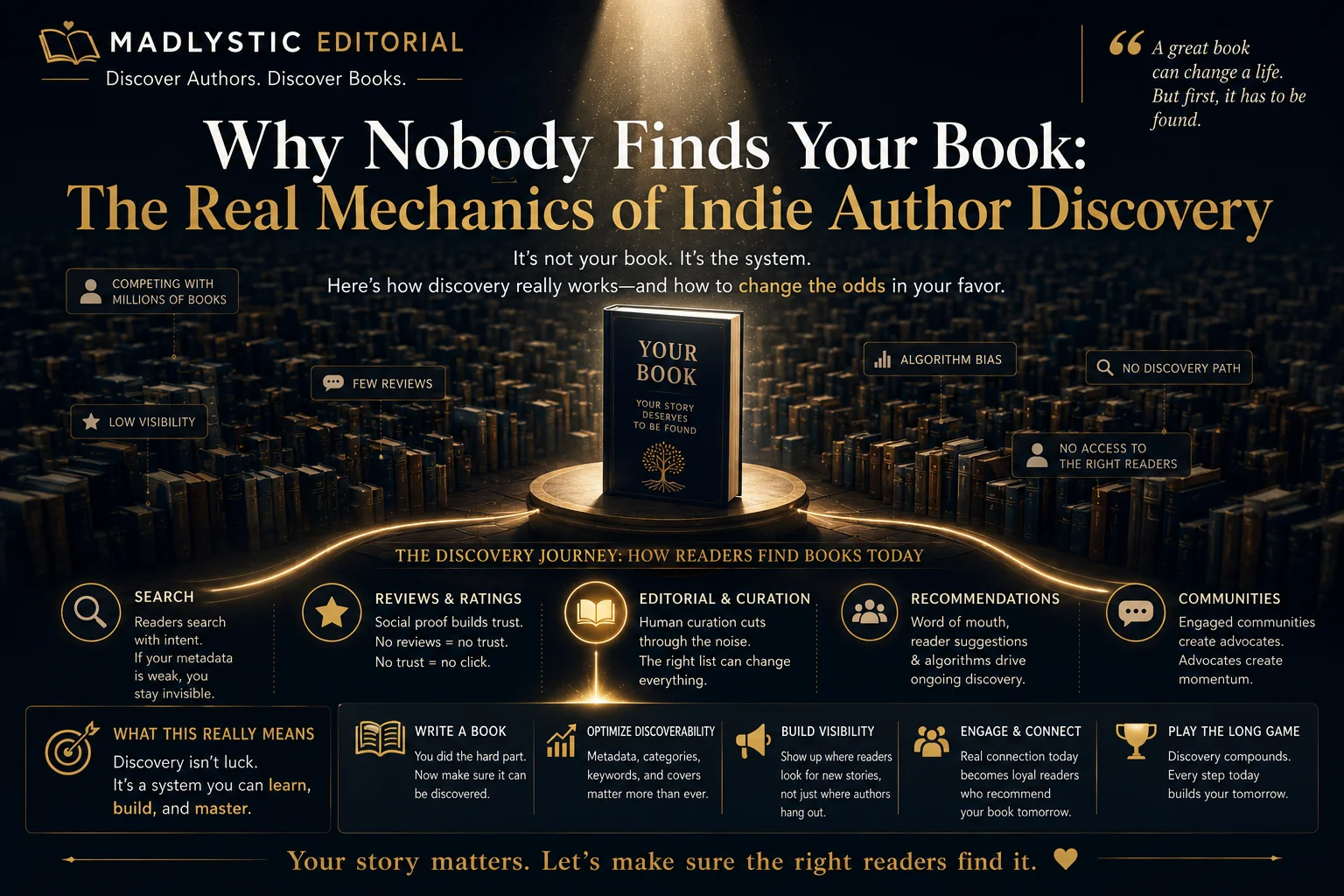
Why Nobody Finds Your Book: The Real Mechanics of Indie Author Discovery
July 19, 2026
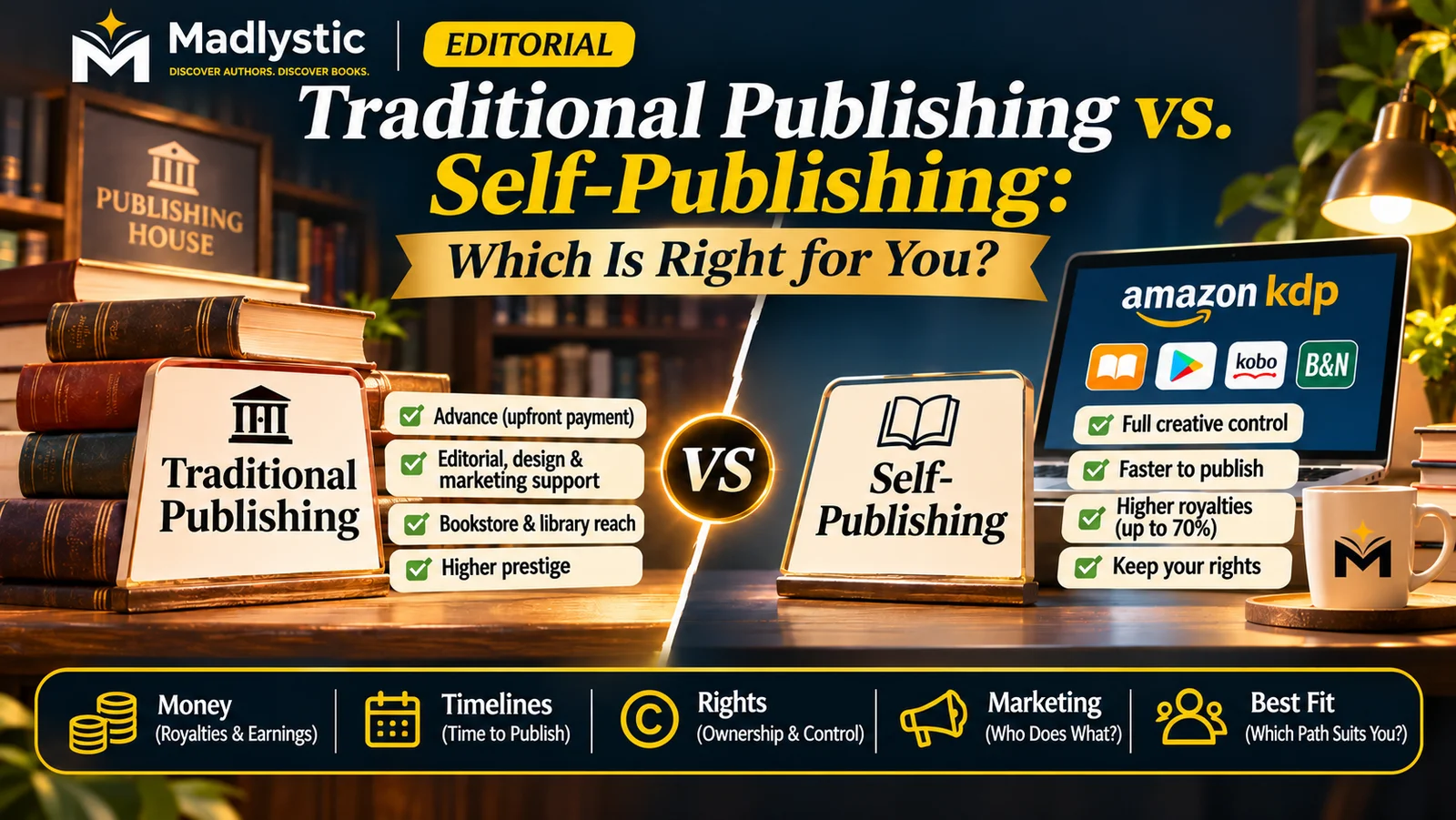
Traditional Publishing vs. Self-Publishing: Which Is Right for You?
November 24, 2026
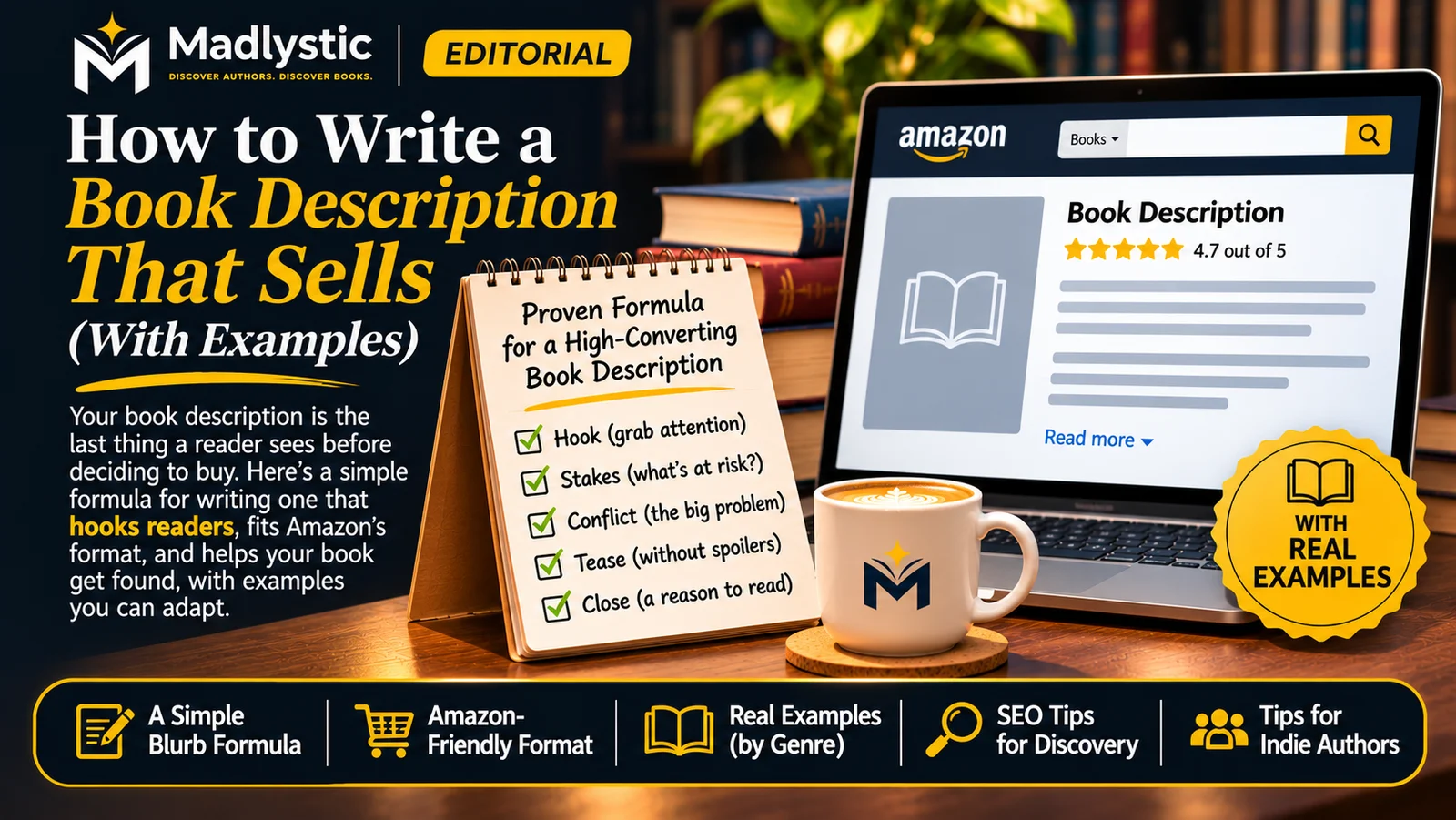
How to Write a Book Description That Sells (With Examples)
November 19, 2026