How to Write an Author Bio (With Templates)
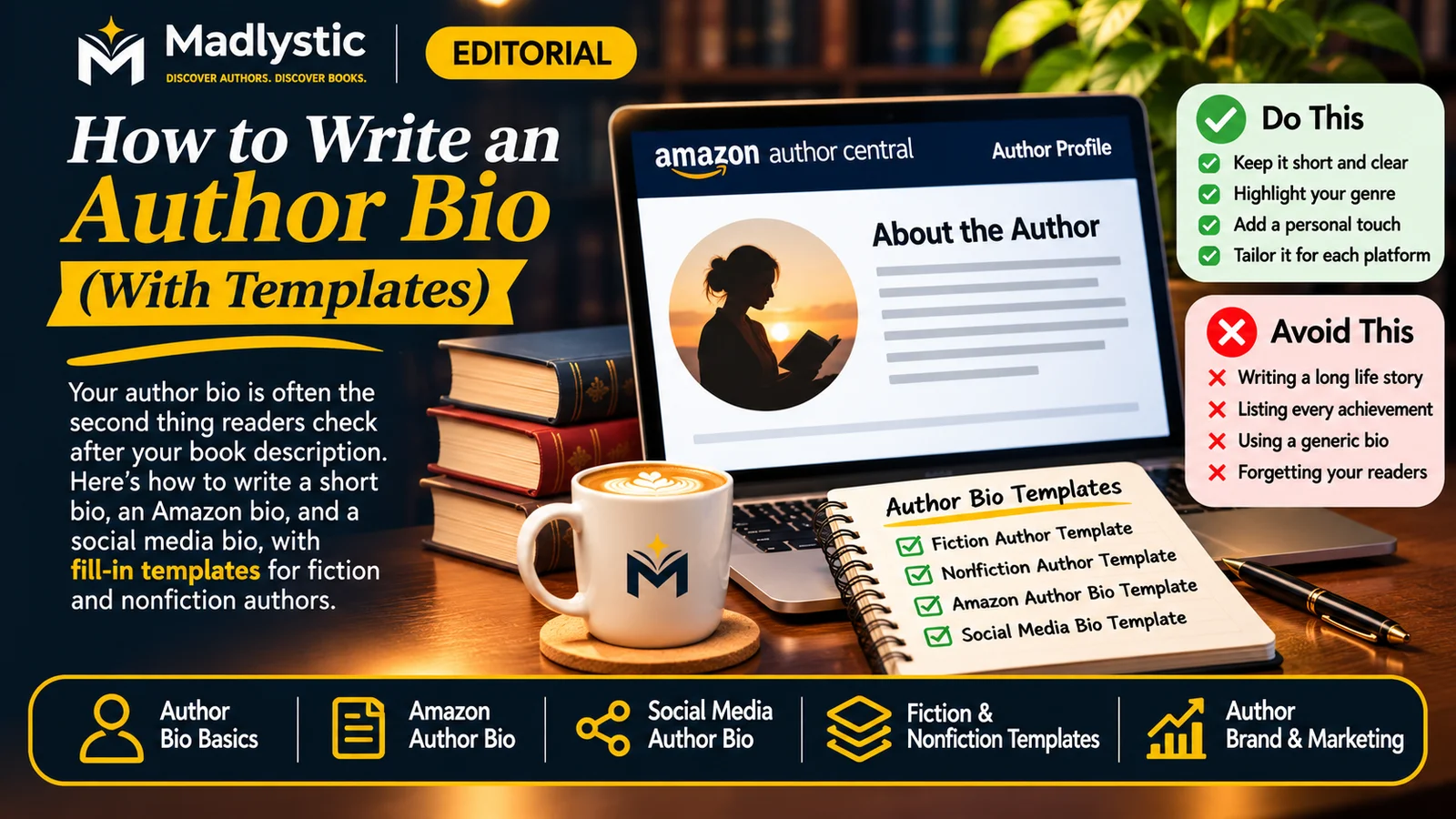
Your author bio is often the second thing readers check after your book description. Here's how to write a short bio, an Amazon bio, and a social media bio, with fill-in templates for fiction and nonfiction authors.
Published November 28, 2026
5 min read
Quote of the Day
"You own everything that happened to you. Tell your stories." — Anne Lamott, Bird by Bird (1994)
A reader finds your book, likes the cover, reads the description, and then scrolls down to see who wrote it. That's where your author bio does its job. A good one makes the reader trust you. A weak one, or a missing one, gives them a reason to leave.
Most authors write their bio last, in a hurry. Here's how to do it properly.
Why your author bio matters
Your bio isn't just a formality. According to IngramSpark's guidance for publishers, Amazon uses Author Pages to "weight" authors (and those authors' titles) within search results and determine their relevance to a particular consumer search. Authors must have an Author Page in order to qualify for an Amazon Author Rank.
UC Press tells its authors the same thing: an expanded bio also helps improve your searchability on Amazon, increasing the chances that readers will find you and your work.
You need three bios, not one
Every platform gives you a different amount of space, so write three versions and keep them saved in one file.
Short bio (30–60 words): For your back cover, guest posts, and press releases.
Long bio (150–250 words): For your Amazon author page and your website's About page.
One-line bio (under 160 characters): For Instagram, X, Threads, and other social profiles.
These lengths are guidelines, not rules. As Bookishelf points out, Amazon does not publish a bio limit they could confirm, and Goodreads states none on its Author Program page. Amazon does have a minimum, though: your biography must be at least 100 characters.
What to include
A strong bio answers three questions in this order:
What do you write? Name your genre in the first sentence so readers know they're in the right place.
Why should readers trust you? Awards, bestseller rankings, a relevant career, or the life experience behind the book.
Who are you as a person? One specific, memorable detail makes you human.
That last point matters more than most authors think. Publishing.co.uk warns against lists of pets and children with no context. "Lives with two cats and three children" — bland. Pick one detail with character.
What to leave out
"Aspiring author." If your book is published, you're an author.
"Self-published." Publishing.co.uk notes that readers don't care; sometimes it signals lower quality. Just "writes" or "is the author of." publishing
Your whole life story. Childhood details only belong if they connect to your books.
Exaggerations. Don't call yourself a "bestselling author" unless you can show where and when. Readers and reviewers do check.
First person or third person?
Third person ("Priya writes...") is the industry standard for back covers, press kits, and guest posts. It sounds more professional, and other people can reuse it.
First person ("I write...") feels warmer and works well on your website, your newsletter, and social media.
For Amazon, either works. Bookishelf suggests choosing third or first, to suit your genre. Cozy mysteries and romance often sound better in first person, while thrillers and nonfiction usually go with third.
If you write under a pen name, the bio should match that persona (read more about why authors use pen names).
Fill-in templates
Copy these, then replace the brackets with your own details.
Short bio (fiction):
[Name] writes [genre] about [what your stories explore]. Their debut novel, [Title], [one fact: award, ranking, or what it's about]. When they're not writing, [Name] [one specific personal detail]. They live in [city or region].
Short bio (nonfiction):
[Name] is a [profession] with [number] years of experience in [field]. In [Title], they share [the problem the book solves]. [Name] has [credential: worked with, spoken at, been featured in]. They live in [city or region].
Long bio (Amazon or website):
Paragraph 1: Genre, your books, and what readers can expect from them.
Paragraph 2: Credentials, background, and why you write what you write.
Paragraph 3: One personal detail, where you live, and a call to action ("Join [Name]'s newsletter for...").
One-line social bio:
[Genre] author of [Title] | [one personality detail] | [link or call to action]
Setting up your Amazon author page
Your long bio goes on Amazon Author Central. Kindlepreneur recommends that a strong author page include a compelling biography, professional author photo(s), all of your books, a +Follow button, and social media and website information.
You can also create a short custom link for your author page. The rules: at least 1 character (no more than 30 characters), no spaces, no special characters other than dashes, periods, and underscores, and no profanity.
If you're publishing for the first time, start with our complete guide to self-publishing on Amazon KDP.
Keep it updated
A bio that still says "debut author" three books later looks neglected. Publishing.co.uk recommends that you update at least once per year, and whenever you have a new book released, a new award, or a major media feature.
Conclusion
Your author bio works next to your book description and your reviews to convince a reader to give your book a chance. Write three versions, lead with your genre, give one reason to trust you, add one human detail, and update it every time your career moves forward.
Have a bio ready? Create your author profile on Madlystic and get your books in front of new readers.
Frequently Asked Questions
How long should an author bio be?
A short bio is about 30–60 words, a long bio for Amazon or your website is about 150–250 words, and a social media bio is one line. Amazon requires at least 100 characters.
Should an author bio be in first or third person?
Third person is standard for back covers and press materials. First person works well on your website and social media. Either is fine on Amazon.
What if I have no awards or credentials?
Focus on what you write, why you write it, and one personal detail. Life experience connected to your book counts as a credential.
Should I mention that I'm self-published?
No. Simply say you "write" or are "the author of" your books. Readers care about the story, not the publishing route.
How often should I update my author bio?
At least once a year, and every time you release a new book or win an award.
Sources
Share this article
Share this article with readers who'll want to read it.
You may also like
How to Price Your Ebook on Amazon KDP (2027 Guide)
November 27, 2026
Book Cover Psychology: How Covers Influence Buying Decisions
July 8, 2026
Why Most Self-Published Books Fail (And How to Avoid It)
July 5, 2026
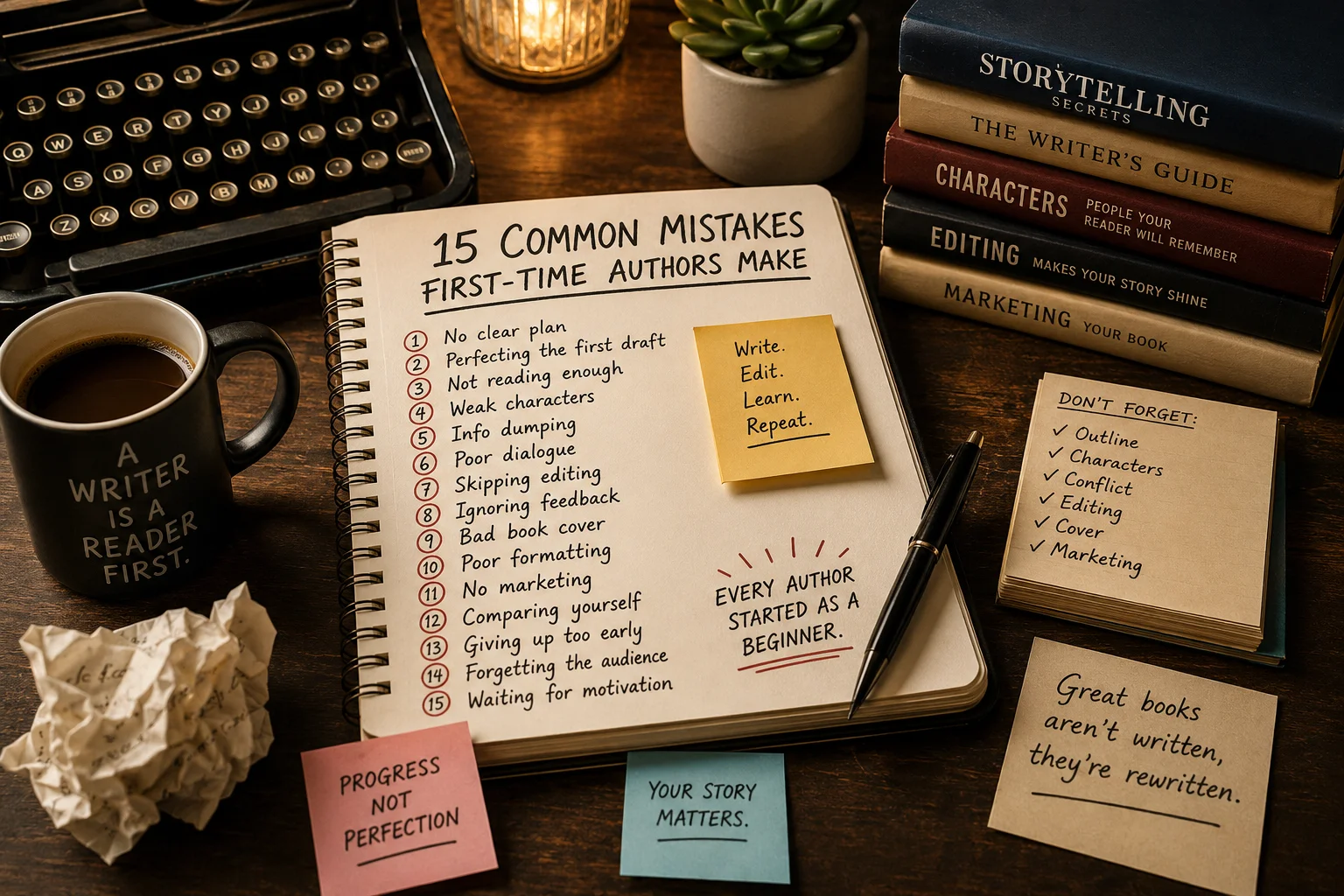
15 Common Mistakes First-Time Authors Make (And How to Avoid Them)
July 2, 2026